
What Is Managed Endpoint Security?
Managed endpoint security is a centralized approach to protecting all endpoint devices by combining monitoring, threat detection, and incident response into a single managed service. It includes solutions such as EPP, EDR, MDR, XDR, and UEM to secure devices against risks like unpatched software, weak passwords, phishing attacks, and unauthorized applications. For Small and Medium-Sized Businesses (SMBs) that lack the resources for a full-scale internal security team, an MSP (Managed Service Provider) provides the infrastructure needed to maintain enterprise-grade security.
This system works by deploying agents across devices, analyzing activity in real time, and responding to threats through automated actions and expert oversight. It supports remote and hybrid workforces by maintaining visibility across distributed environments while helping growing organizations manage increasing security demands.
Managed endpoint security delivers measurable benefits, including faster threat detection, centralized visibility, and reduced financial risk. It also addresses challenges like device diversity and limited in-house expertise. By comparing managed and in-house approaches, understanding cost factors, and following best practices, businesses can build a reliable endpoint security strategy that adapts to growth and evolving cyber threats.
What Are the Types of Managed Endpoint Security?
The types of managed endpoint security include Managed Endpoint Protection Platform (EPP), Managed Endpoint Detection and Response (EDR), Managed Detection and Response (MDR), Managed Extended Detection and Response (XDR), Co-Managed Endpoint Security, and Managed Unified Endpoint Management (UEM). MSPs often bundle these services into manageable tiers, allowing SMBs to select the level of protection that fits their budget and industry requirements. Each type focuses on different layers of protection, combining threat detection, response, and device management to defend against malware, ransomware, phishing, and other cyber threats.
6 core types of managed endpoint security are:
Managed Endpoint Protection Platform (EPP): Serves as a high-performance defensive shield, using antivirus and machine learning to neutralize threats before they can execute on operating systems.
Managed Endpoint Detection and Response (EDR): Provides deep visibility and behavioral analysis to rapidly contain advanced threats that bypass traditional preventive controls.
Managed Detection and Response (MDR): Provides SMBs with 24/7 expert monitoring and active threat containment via a dedicated SOC.
Managed Extended Detection and Response (XDR): Correlates data across endpoints, networks, and cloud platforms to identify and stop complex, multi-stage attack patterns.
Co-Managed Endpoint Security: Provides supplemental monitoring and incident response support to an internal IT team while the business retains full environment control.
Managed Unified Endpoint Management (UEM): Establishes total administrative control by enforcing security policies and managing configurations across all mobile, laptop, and IoT devices.
- Managed Endpoint Protection Platform (EPP)
EPP serves as a high-performance defensive shield, neutralizing threats before they can execute. This service uses antivirus, next-generation antivirus, and machine learning models to scan files, analyze behavior, and block suspicious activity at the endpoint level. It operates continuously in the background to stop known and emerging threats early in the attack chain. EPP protects business devices from malware, ransomware, and file-based attacks that target operating systems and installed applications. - Managed Endpoint Detection and Response (EDR)
EDR provides deep visibility and rapid containment for threats that manage to bypass preventive controls. The system collects endpoint telemetry, tracks user and process behavior, and applies behavioral analysis to detect anomalies. Security teams then investigate alerts, isolate compromised endpoints, and execute incident response actions. This approach helps contain threats such as fileless malware, advanced persistent threats, and data exfiltration attempts that evolve beyond traditional signature-based detection. This type of service is vital for growing companies that handle sensitive proprietary data and need to prevent breaches from spreading. - Managed Detection and Response (MDR)
MDR introduces an elite, human-led security layer that transforms automated data into actionable intelligence. Instead of relying only on automated alerts, security experts actively monitor, investigate, and respond to threats through a dedicated SOC environment. Working with an MSP for MDR gives SMBs 24/7 coverage that would otherwise be impossible for a small internal team to maintain. The service filters noise, prioritizes real risks, and executes containment and remediation steps when needed. MDR protects organizations from sophisticated cyber threats, reduces alert fatigue, and ensures faster response to active attacks across endpoints and connected systems. - Managed Extended Detection and Response (XDR)
XDR creates a unified security ecosystem by correlating data across endpoints, networks, cloud platforms, and email systems. It correlates signals from multiple sources to identify attack patterns that would remain hidden in isolated systems. This integrated approach is especially beneficial for multi-location enterprises or businesses with complex cloud-based workflows. XDR protects against multi-stage attacks, lateral movement, and complex threat chains that span different parts of the IT infrastructure. - Co-Managed Endpoint Security
Co-Managed Endpoint Security serves as a strategic partnership that bridges the gap between your internal IT capabilities and specialized external expertise. In this model, businesses retain full control over their environment while a managed provider delivers supplemental support for monitoring, threat detection, and incident response. This is an ideal solution for mid-sized organizations with an existing IT person who needs the advanced tools and backup of an MSP. - Managed Unified Endpoint Management (UEM)
UEM establishes total administrative control by securing and configuring all endpoint devices from a single, centralized platform. The platform enforces security policies, manages device configurations, and ensures regular updates across laptops, mobile devices, and IoT endpoints. By outsourcing UEM to an MSP, smaller businesses ensure that every remote phone or laptop stays compliant without manual updates. It protects against unauthorized access, unpatched vulnerabilities, and risks introduced by unmanaged or bring-your-own-device environments.
How Does Managed Endpoint Security Work to Secure Your Business?
Managed endpoint security secures your business by providing continuous visibility and control over all endpoint devices through a centralized system that detects, responds to, and prevents cyber threats in real time. For an SMB, this means an MSP handles the technical heavy lifting, ensuring security stays active without requiring daily attention from the business owner. It combines automated monitoring, behavioral analysis, and expert-driven incident response to reduce the risk of undetected attacks and operational disruption.
Detailed working process of Managed Endpoint Security:
- Deploy and Monitor Endpoints: Agents run on devices such as laptops, servers, and mobile endpoints to track activity, user behavior, and vulnerabilities in real time.
- Centralize and Analyze Data: Endpoint data flows to a unified platform where behavioral analysis, machine learning, and threat intelligence identify suspicious activity.
- Detect and Prioritize Threats: The system flags risks in real time and ranks them by severity, helping security teams focus on critical threats while reducing alert fatigue.
- Automate Threat Response: The platform isolates compromised devices, blocks malicious processes, and contains threats before they spread.
- Investigate and Remediate Incidents: Security teams analyze alerts, perform threat hunting, and remove threats to restore secure operations.
- Apply Patches and Enforce Policies: The system updates operating systems, fixes vulnerabilities, and enforces security controls across all endpoints.
- Maintain Continuous Protection: Ongoing monitoring and optimization improve detection accuracy and adapt security to evolving cyber threats.
How Does Managed Endpoint Security Support Remote and Hybrid Workforces?
Managed endpoint security supports remote and hybrid workforces by ensuring every device remains protected and controlled outside the corporate network. Because distributed environments increase exposure to unsecured networks and inconsistent security, the system enforces centralized policies and verifies device health in real time. MSPs provide the infrastructure needed to secure remote teams, allowing SMBs to hire talent from anywhere without increasing their risk profile.
Endpoint agents monitor activity and detect anomalies regardless of the connection type, whether from a home network or public Wi-Fi. If a remote device is compromised, the system immediately isolates it to prevent threats from spreading across the organization. By maintaining visibility and securing access through controls such as multi-factor authentication, managed endpoint security protects sensitive data without interrupting daily operations.
What Are the Most Common Vulnerabilities That Put Endpoints at Risk?
The most common vulnerabilities that put endpoints at risk include unpatched software and outdated operating systems, weak or reused passwords, lack of encryption on sensitive data, shadow IT and unauthorized applications, unmanaged BYOD devices, and phishing-induced malware execution by end users. SMBs are primary targets for these exploits because attackers assume smaller companies have weaker defenses and fewer monitoring resources. These weaknesses create exploitable entry points that attackers use to access systems, execute malicious activity, and move laterally across endpoints, increasing the risk of data breaches, data exfiltration, and operational disruption across the business.
6 common vulnerabilities that put endpoints at risk include:
Unpatched Software and Outdated Operating Systems
Weak or Reused Passwords Across Endpoint Devices
Lack of Encryption on Sensitive Endpoint Data
Shadow IT and Unauthorized Application Installations
Unmanaged BYOD Devices Connecting to Corporate Networks
Phishing-Induced Malware Execution by End Users
- Unpatched Software and Outdated Operating Systems
A lack of automated update systems often leaves businesses running software with known security holes that attackers are eager to exploit. Once vendors release updates, creating a narrow window during which attackers actively target unpatched systems. Many SMBs struggle to keep up with these updates, making them easy targets for automated botnets. This risk increases when businesses delay updates or fail to maintain consistent patch management across endpoints. Attackers exploit these gaps to install malware, gain system access, or escalate privileges. - Weak or Reused Passwords Across Endpoint Devices
Organizations often experience breaches because they fail to enforce strict complexity rules, leading employees to choose easily guessable credentials for convenience. This risk develops when employees reuse passwords across systems or choose simple combinations that attackers can easily guess or crack. Once a single credential is exposed, attackers use automated methods to access multiple systems. For example, if an employee uses “Summer2026!” for both their social media and their workstation, a leak on a random website could allow a hacker to walk right into your corporate network. This can lead to unauthorized access, data breaches, and full compromise of business applications and user accounts. - Lack of Encryption on Sensitive Endpoint Data
Failing to mandate full-disk encryption means that any data stored on a physical device remains exposed if the device is lost or stolen. This creates a massive liability for professional services firms, such as accounting or marketing firms, that handle high-value client information. Without encryption, a stolen laptop isn’t just a hardware loss. It is a data breach. If a device is accessed without authorization, sensitive files and credentials can be extracted directly in a readable format. - Shadow IT and Unauthorized Application Installations
When official IT processes are too slow, employees often install unvetted third-party apps to finish their work faster, inadvertently introducing “Shadow IT” into the environment. These unauthorized tools lack security oversight and may contain hidden vulnerabilities. SMBs with limited IT staff often overlook these apps until a breach occurs, leading to data leakage, malware infections, and a total loss of visibility into what is actually running on company hardware. - Unmanaged BYOD Devices Connecting to Corporate Networks
Prioritizing convenience over security by allowing personal devices to access corporate data without management oversight turns personal hardware into unmonitored gateways for attacks. While “Bring Your Own Device” offers flexibility, these machines often lack enterprise-grade protection or run outdated software. This makes them easy targets for hackers, resulting in unauthorized access and the spread of threats from a personal phone or tablet directly into the business network. - Phishing-Induced Malware Execution by End Users
Attackers exploit human psychology to trick untrained employees into clicking malicious links, effectively using your own staff to bypass technical defenses. This social engineering is one of the most common ways malware gains a foothold in a system. Once an employee opens an infected attachment, the malware can capture sensitive data or create a “backdoor” for the attacker, leading to credential theft and full network compromise.
Which Businesses Need Managed Endpoint Security?
Managed endpoint security is essential for small and mid-sized companies, as well as businesses of all sizes with remote or hybrid workforces, those handling sensitive data, operating across multiple locations, or working in high-risk industries such as healthcare and finance. Companies experiencing rapid device growth must also prioritize this protection because these environments increase endpoint exposure and expand the attack surface. These factors significantly raise the risk of cyber threats if left unmanaged.
- Small and Mid-Sized Businesses Without a Dedicated IT Security Team
SMBs often operate without a full-time IT security team, which limits their ability to continuously monitor endpoints and respond to threats. In this setup, threats can go unnoticed for longer periods, increasing the chance of damage. Implementing managed endpoint security introduces continuous monitoring and expert-led response, which helps close these gaps. Without this layer, these businesses remain more exposed to ransomware, undetected malware, and delayed incident response. - Businesses With Remote or Hybrid Workforces
A distributed workforce increases the number of endpoints connecting from home networks, public Wi-Fi, and unmanaged environments. This setup makes it harder to enforce consistent security controls across devices. Applying managed endpoint security helps maintain visibility, enforce access policies, and monitor activity regardless of location. Without these controls, businesses risk unauthorized access, insecure device usage, and threats spreading across remote systems. - Companies Handling Sensitive Customer or Financial Data
Organizations that handle customer records or financial data must maintain strict control over how endpoint devices access, process, and store that information, since even small gaps in monitoring or protection can expose sensitive data to unauthorized users and increase the risk of data breaches and compliance violations. Industries like e-commerce, insurance, and telecommunications specifically require this oversight to protect consumer payments and personal identities. Using managed endpoint security strengthens data protection through continuous monitoring and controlled access. Without it, the likelihood of data breaches, compliance violations, and financial loss increases significantly. - Organizations Operating Across Multiple Locations or Offices
Managing endpoints across multiple offices creates challenges in maintaining consistent policies and visibility. Each location may introduce variations in security practices, leading to gaps in protection. Centralized endpoint security management helps standardize controls and monitor all devices from one platform. Without this approach, organizations may face inconsistent security coverage and slower incident response across locations. - Businesses in High-Risk Industries Like Healthcare, Legal, and Finance
The healthcare, legal, and finance industries handle regulated or high-value data and face targeted attacks and strict compliance requirements. Attackers often target these sectors because of the value of the data they store. Applying managed endpoint security strengthens threat detection and supports regulatory compliance within healthcare, legal, and financial organizations. Without strong endpoint protection, businesses in these sectors face increased risk of targeted attacks, legal penalties, and reputational damage. - Companies Experiencing Rapid Growth and Expanding Device Usage
As businesses grow, the number of endpoints, users, and access points increases quickly, and such growth can outpace internal security capabilities, leading to unmanaged devices and overlooked vulnerabilities. Scalable endpoint security helps maintain control, visibility, and consistent protection as the environment expands. Without it, security gaps widen, making it easier for threats to exploit newly added or poorly managed endpoints.
What Are the Benefits of Managed Endpoint Security for Your Business?
The benefits of managed endpoint security include real-time threat detection, faster incident response, centralized visibility, better device control, support for remote work, reduced financial risk, and scalable protection. These advantages help your business maintain control over all endpoints and detect and stop threats before they cause damage.
7 major benefits of Managed endpoint security:
Detects Threats in Real Time Across All Endpoints
Responds to Incidents Faster With Automated Workflows
Monitors All Endpoints From a Single Unified Dashboard
Provides Complete Visibility Into Device Health and Activity
Adapts to Remote, Hybrid, and On-Site Work Environments
Minimizes Financial Damage From Data Breaches and Downtime
Scales Security Coverage as the Business Grows
- Detects Threats in Real Time Across All Endpoints: Real-time threat detection helps businesses identify malicious activity as it happens, rather than after damage occurs. This allows security teams to act immediately, reducing the time attackers have to move across systems. In practice, this lowers the risk of data breaches, limits operational disruption, and keeps business systems running without unexpected downtime.
- Responds to Incidents Faster With Automated Workflows: Faster incident response reduces the impact of security events before they escalate into larger problems. Automated workflows take immediate action, such as isolating compromised devices or blocking malicious processes, without waiting for manual intervention. This shortens recovery time, minimizes business interruption, and helps maintain continuity during security incidents.
- Monitors All Endpoints From a Single Unified Dashboard: A unified dashboard provides businesses with a single place to track and manage all endpoint activity. This central view removes the need to switch between multiple tools and improves decision-making. With better oversight, teams can identify issues faster, respond more efficiently, and maintain consistent security across all devices.
- Provides Complete Visibility Into Device Health and Activity: Full visibility into endpoint activity allows businesses to understand what is happening across their devices at all times. This includes tracking system health, user behavior, and potential vulnerabilities. With this level of insight, organizations can detect unusual activity early, prevent security gaps, and maintain a more stable and secure IT environment.
- Adapts to Remote, Hybrid, and On-Site Work Environments: Flexible endpoint security ensures consistent protection regardless of where employees work. It supports devices used in offices, homes, and remote locations without reducing security standards. This helps businesses maintain productivity while keeping systems secure, even as work environments change.
- Minimizes Financial Damage From Data Breaches and Downtime: Effective endpoint security reduces the financial impact of cyber incidents by preventing attacks or limiting their spread. This includes avoiding costs related to downtime, data recovery, legal penalties, and lost business opportunities. By reducing these risks, businesses can protect revenue and maintain customer trust.
- Scales Security Coverage as the Business Grows: Scalable security allows businesses to expand their operations without increasing risk. As new devices, users, and locations are added, endpoint security coverage extends automatically to maintain protection. This ensures that growth does not create security gaps and allows businesses to scale with confidence.
What Are the Challenges of Implementing Managed Endpoint Security?
Implementing managed endpoint security involves significant challenges, including managing diverse BYOD environments, integrating complex IT systems, addressing a lack of in-house expertise, and minimizing performance impacts. These challenges can slow down deployment, create security gaps, and undermine the overall effectiveness of your protection.
4 major challenges of implementing managed endpoint security are:
- Managing Diverse Devices and BYOD Environments
With modern workspaces utilizing a complex mix of Windows, macOS, Linux, iOS, and Android devices, Bring Your Own Device (BYOD) policies often strip security teams of control over operating systems and third-party apps. This fragmentation creates “blind spots” where unpatched or personal devices become easy entry points for malware. It forces the business to spend more time troubleshooting compatibility issues rather than focusing on high-level threat prevention. - Integrating With Existing IT Systems
Endpoint security solutions often struggle to integrate with existing identity systems and cloud platforms, resulting in siloed data and operational friction that slow incident response times. If the new security software does not “talk” to your current stack, IT teams end up managing multiple disconnected dashboards, which increases the risk of human error during a critical breach. - Lack of In-House Cybersecurity Expertise
Many companies lack the specialized staff needed to configure complex policies and interpret security logs, leading to “alert fatigue,” in which critical warnings are missed amid a flood of minor notifications. This expertise gap leaves the organization vulnerable despite having expensive software in place. - Performance Impact on Endpoint Devices
Security agents consume critical CPU, memory, and disk resources to scan for threats in real-time, which can cause significant system lag and hinder employee productivity. When security software is too “heavy,” frustrated users may attempt to disable security features or turn to unauthorized “shadow IT” tools, unintentionally compromising the entire network.
Managed Endpoint Security vs In-House Security
Managed endpoint security provides outsourced expertise, faster response, and scalable protection, while in-house security offers direct control but requires significant investment in tools, staff, and ongoing management. For most businesses, the difference comes down to cost efficiency, response speed, and the ability to maintain consistent security coverage as the environment grows.
| Factor | Managed Endpoint Security | In-House Security |
| Cost | Predictable monthly fee, no large upfront tool or staff costs. | High costs for hiring, training, and expensive infrastructure. |
| Expertise | Instant access to expert teams and 24/7 threat monitoring. | Relies on internal staff who may have limited bandwidth. |
| Response Time | Guarantees continuous monitoring and immediate threat response. | Limited by staff hours, creates delays during nights or weekends. |
| Scalability | Quickly scales as business adds more devices or locations. | Slow to grow, requires new hires and too, upgrades. |
| Coverage | Ensures consistent protection for remote and hybrid teams. | Inconsistent coverage due to limited internal resources. |
How Much Does Managed Endpoint Security Cost for a Business?
Managed endpoint security costs between $3 and $15 per endpoint or user per month for basic services, while MDR solutions range from $10 to $20+ per asset monthly. Fully managed or enterprise-level packages can reach $150 to $325+ per user, depending on the level of support and coverage. For a small business with 50 endpoint devices, a standard MDR service at $15 per device would result in a total monthly cost of $750.
Pricing varies based on several factors such as depth, asset count, and technical complexity. The scope of services, including EDR, XDR, and full incident response, costs more than basic endpoint protection. The level of monitoring, especially 24/7 SOC coverage, increases pricing due to continuous oversight. The number of endpoints or users directly affects cost, as larger environments require broader coverage. Integration with existing systems, compliance requirements, and the overall complexity of the IT environment also influence the final pricing.
What Are the Best Practices for Managed Endpoint Security?
The best practices for managed endpoint security include conducting comprehensive assessments, implementing customized designs, ensuring continuous monitoring, and maintaining regulatory compliance. When applied correctly, these practices provide a roadmap for mitigating cyber risks, strengthening device integrity, minimizing operational gaps, and addressing evolving security challenges.
6 best practices for managed endpoint security:
- Start with a Comprehensive Endpoint Security Assessment: Identify all endpoint devices, evaluate existing security controls, and detect vulnerabilities to establish a clear baseline for protection. Using an endpoint security audit checklist helps standardize this process and ensures no critical gaps are overlooked.
- Ensure a Customized Security Design for Your Environment: Align security configurations with your business needs, device types, and risk profile to deliver effective, relevant protection.
- Require Continuous Monitoring Across All Endpoint Devices: Maintain real-time visibility into endpoint activity to detect threats early and respond before they escalate.
- Confirm Compliance Support for Your Industry’s Regulatory Requirements: Ensure security controls align with standards such as HIPAA or PCI DSS to avoid penalties and protect sensitive data.
- Choose a Provider With Certified Tools and Security Partnerships: Work with providers that use trusted technologies and maintain industry certifications to ensure reliable protection and support.
- Review Security Reports and Service Performance Regularly: Work with your MSP to analyze monthly reports and ensure the service meets your security and performance goals.
How to Choose the Right Managed Endpoint Security Service?
Choose a managed endpoint security service by evaluating how well the provider can monitor, detect, and respond to threats while supporting your business environment and security requirements. A well-aligned managed endpoint security service provider helps maintain consistent protection, reduce risks, and ensure reliable security operations across all endpoints.
Things to consider while selecting a managed endpoint security service:
- Evaluate monitoring and response capabilities: Ensure the provider offers continuous monitoring and fast incident response to handle threats in real time.
- Check expertise and security operations support: Look for experienced teams and 24/7 SOC support to maintain consistent protection.
- Assess integration with your existing environment: Confirm the solution works with your current systems, tools, and workflows without disruption.
- Verify scalability and flexibility: Choose an MSP that can grow with your business and support remote, hybrid, and on-site staff.
- Review reporting and visibility features: Ensure the provider delivers clear reports and insights into endpoint activity and security performance.
- Confirm compliance and security standards: Select a provider that supports your industry’s regulatory requirements and follows recognized security practices.

Recent Post
Endpoint security safeguards devices like desktops, laptops, mobile devices, servers, and IoT devices from cyber threats. Key components include antivirus/anti-malware software, Endpoint Detection and Response (EDR), Mobile Device Management (MDM), and technologies like real-time monitoring and threat detection. These measures are crucial, as 68% of firms have suffered one or more endpoint attacks compromising data or IT infrastructure, according to the Ponemon Institute.
Endpoint security solutions such as firewalls, Multi-factor Authentication (MFA), and Virtual Private Networks (VPNs) enhance protection against unauthorized access and data breaches and ensure compliance with regulations like GDPR and HIPAA. Organizations often rely on managed service providers (MSPs) to deploy and manage advanced endpoint security tools like Trend Micro XDR and Carbon Black, which employ AI for cross-layer detection and automated responses. According to Market.us, the global endpoint security market is projected to reach USD 36.5 billion by 2033, so investing in robust endpoint security is vital for mitigating risks and safeguarding digital assets.
Organizations benefit from endpoint cybersecurity Services through cost savings, faster incident response, and centralized management, while best practices like strong authentication, regular audits, and employee training address vulnerabilities such as phishing, malvertising, and IoT exploits. Endpoint security solutions, categorized as Endpoint Protection Platforms (EPP), EDR, Extended Detection and Response (XDR), and Managed Detection and Response (MDR), cater to diverse organizational needs. Prominent examples, including Microsoft Defender and CrowdStrike Falcon, provide scalability, advanced analytics, and real-time threat intelligence for comprehensive protection.
What Is Endpoint Security/Endpoint Protection?
Endpoint security, or endpoint protection, refers to the strategies and technologies that safeguard endpoint devices such as desktops, laptops, mobile devices, servers, and IoT devices against cyber threats. These devices, or endpoints, serve as entry points for cybercriminals, making their security crucial for overall network integrity. Securing each endpoint is essential to prevent unauthorized access, data breaches, and other malicious activities that could compromise the entire network.
Endpoints are pivotal in network security, acting as potential gateways for cyber threats. Key mechanisms of endpoint security include real-time monitoring, threat detection, and response capabilities to identify and mitigate risks promptly. Comprehensive endpoint security solutions employ multiple layers of defense, such as antivirus/anti-malware software, firewalls, and advanced tools like Endpoint Detection and Response (EDR) systems and Mobile Device Management (MDM) platforms.
A robust endpoint security solution comprises various components designed for holistic protection. Examples include Antivirus/Anti-malware software for detecting and removing malicious software, EDR systems for continuous threat monitoring and response, and MDM platforms for enforcing security policies on mobile devices. Other essential components are Network Access Control (NAC) solutions, Data Loss Prevention (DLP) tools, email security gateways, patch management systems, Multi-factor Authentication (MFA), and Virtual Private Networks (VPNs), collectively ensuring comprehensive protection against endpoint vulnerabilities.
Why Is Endpoint Security Important?
Endpoint security is a cornerstone of cybersecurity that is critical for preventing data breaches and protecting sensitive data on devices from unauthorized access and cyberattacks. Specific features such as encryption, access controls, and advanced threat detection are integral to preventing breaches. For instance, data encryption ensures that sensitive information like personal details, financial records, and intellectual property remains secure during transmission. Access controls limit who can view or modify data, reducing the risk of internal threats.
Endpoint security is essential for compliance with regulations like GDPR, HIPAA, and Payment Card Industry Data Security Standard (PCI-DSS), helping businesses avoid fines and legal penalties and maintain customer trust. Protecting sensitive data is not only about regulatory compliance but also about ensuring business continuity. Cyberattacks can disrupt operations, leading to significant financial losses and damage to reputation. According to a report by Morphisec, 81% of firms experienced attacks involving some type of malware, highlighting the pervasive risk. By implementing endpoint security measures such as regular security audits and secure access controls, businesses can prevent disruptions, retain customer trust, and safeguard their competitive advantage in the market.
Here are some real-world examples of data breaches and how effective endpoint security could have prevented them
- Equifax (2017):
A critical vulnerability in the Apache Struts web application framework was exploited, exposing the personal data of 145.5 million people.
Prevention: Timely patch management and vulnerability scanning could have identified and addressed this weakness before it was exploited.
- Target (2013):
Attackers gained access through a third-party HVAC vendor’s credentials, eventually compromising point-of-sale systems and stealing the credit card data of 40 million customers.
Prevention: Stronger access controls, network segmentation, and endpoint monitoring could have detected and prevented the lateral movement of the attackers.
- SolarWinds (2020):
Attackers inserted trojanized (malicious) code into SolarWinds’ Orion software updates. As a result, nearly 18,000 customers received a compromised software update.
Prevention: Advanced endpoint detection and response (EDR) systems could have identified the abnormal behavior of the compromised software.
- Colonial Pipeline (2021):
A ransomware attack via a compromised VPN account led to a significant fuel pipeline shutdown. The attackers accessed nearly 100 GB of data. A ransom of 75 Bitcoins (USD4.4 million) was paid for the decryption key.
Prevention: Multi-factor authentication and more robust endpoint security measures could have prevented the initial unauthorized access.
- Marriott International (2018):
A breach of the Starwood guest reservation database exposed the personal information of up to 500 million guests.
Prevention: Data encryption, access controls, and continuous database activity monitoring could have mitigated this breach’s impact.
Key Benefits of Endpoint Security
Key benefits of endpoint security range from comprehensive threat protection, cost savings, and improved compliance to enhanced productivity and faster incident response. Endpoint security is essential to ensure robust protection against diverse cyber threats, support the secure operation of digital environments, improve overall security posture, mitigate risks, and support the seamless functionality of organizations.
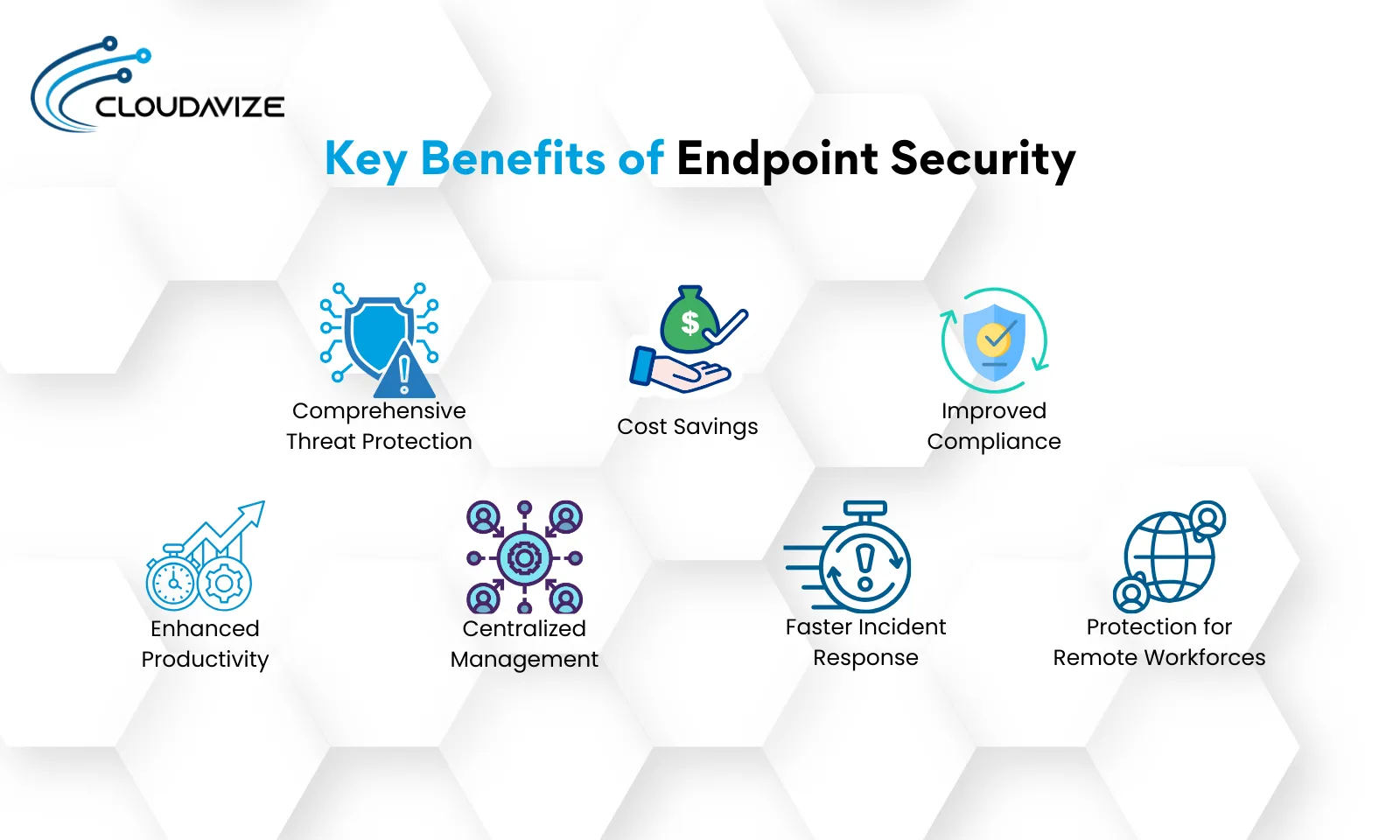
Comprehensive Threat Protection
With endpoint security, organizations are safeguarded against various cyber threats, including malware, ransomware, phishing, and zero-day exploits. Protecting sensitive data and maintaining privacy is crucial to reducing the risk of data breaches. Endpoint security protects sensitive data and maintains business operations and customer trust by employing encryption, access controls, and advanced threat detection.
Cost Savings
Investing in endpoint security contributes to significant cost savings by preventing data breaches, reducing downtime, and minimizing the financial impact of cyber incidents. Robust endpoint security solutions provide long-term economic benefits, shielding businesses from the costly consequences of cyberattacks.
Improved Compliance
Endpoint security helps organizations comply with industry regulations and standards such as GDPR, HIPAA, and PCI-DSS. Maintaining compliance is essential for avoiding fines and legal penalties, ensuring business credibility, and making endpoint security an integral part of regulatory adherence.
Enhanced Productivity
Minimizing disruptions from security incidents is vital in enhancing productivity. Endpoint security ensures secure access to resources, supports remote work, and maintains a seamless workflow. By reducing the frequency and impact of cyber threats, endpoint security allows employees to focus on tasks without interruption, boosting overall efficiency.
Centralized Management
Centralized management provided by endpoint security platforms enables IT administrators to monitor, manage, and secure all endpoints from a single console. This approach streamlines operations, reduces administrative overhead, and improves oversight of the organization’s security posture. The ability to manage multiple security functions from one place results in significant efficiencies and enhanced control.
Faster Incident Response
Endpoint security’s significant advantage is its ability to detect and respond to security incidents quickly. Technologies like real-time monitoring, automated threat response, and behavioral analysis tools allow for rapid incident detection and mitigation. This swift response minimizes potential damage, reduces recovery time, and ensures business operations can continue with minimal disruption.
Protection for Remote Workforces
In today’s remote work environment, protecting remote devices and ensuring safe connections to corporate networks is more critical than ever. Endpoint security addresses these unique challenges by securing remote endpoints and facilitating safe, reliable access to corporate resources. This protection is essential for maintaining the security and productivity of remote workers, who are often targeted by cybercriminals due to less secure home networks.
Types of Endpoint Security Solutions
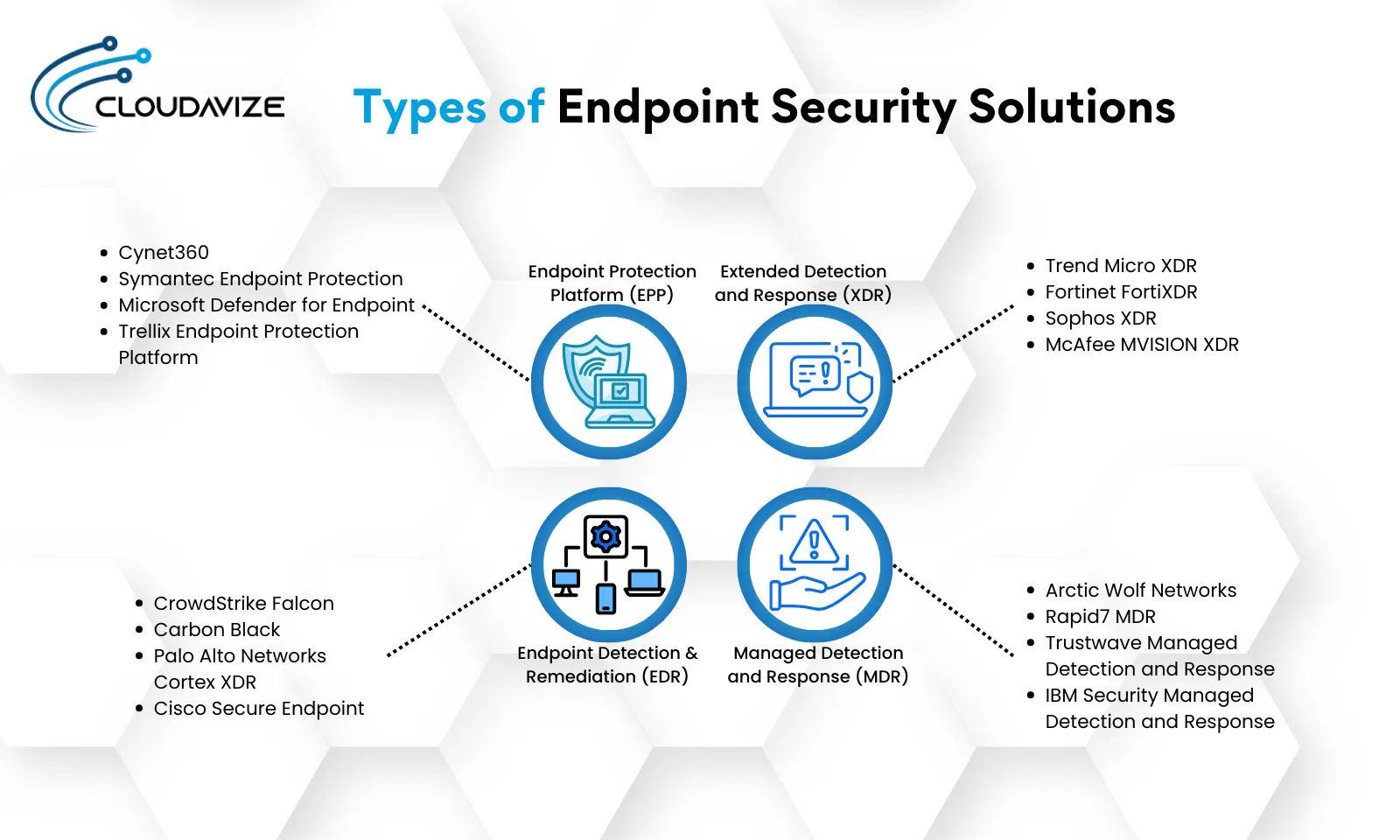
Types of endpoint security solutions are Endpoint Protection Platforms (EPP), Endpoint Detection and Remediation (EDR), Extended Detection and Response (XDR), and Managed Detection and Response (MDR). They protect technology infrastructure against diverse cyber threats, safeguard sensitive data, and maintain the overall security of an organization’s network. Understanding these different types can help businesses implement the most effective security measures.
Endpoint Protection Platform (EPP)
Endpoint Protection Platforms (EPP) are designed to prevent endpoint threats by providing comprehensive protection. EPPs typically include antivirus, anti-malware, and firewall capabilities.
Some of the popular EPP solutions are:
- Cynet360: Cynet360 offers integrated threat detection and response, automated investigation and remediation, behavioral analysis, and fileless attack protection. Benefits include comprehensive protection across all endpoints, reduced incident response time, and enhanced detection of sophisticated threats. It is available in Elite and All-in-One packages. You can request a quote to know the pricing details.
- Symantec Endpoint Protection: Symantec Endpoint Protection features advanced machine learning, exploit prevention, network firewall, device control, and intrusion prevention. It offers robust malware protection, prevention of zero-day attacks, and secure network communications. It will cost you $39 for a one-year subscription license with essential support.
- Microsoft Defender for Endpoint: Microsoft Defender for Endpoint provides real-time threat detection, automated investigation and remediation, EDR, and threat and vulnerability management, improving threat visibility and quick incident resolution. It is available as Microsoft Defender for Endpoint P1 and Microsoft Defender for Endpoint P2, which are included in Microsoft 365 E3 and E5, respectively.
- Trellix Endpoint Protection Platform: Trellix Endpoint Protection Platform offers a comprehensive solution for safeguarding organizational endpoints against evolving cyber threats. Leveraging AI-driven threat intelligence, the platform provides real-time protection by accurately identifying and neutralizing potential risks. Its dynamic application containment feature isolates suspicious activities, preventing the spread of threats across the network. Trellix Endpoint Security (TRXE1) is available at an annual fee of $136.16 per user.
Endpoint Detection and Remediation (EDR)
Endpoint Detection and Response (EDR) focuses on detecting and responding to advanced threats through continuous monitoring and analysis. EDR solutions are essential for identifying and mitigating sophisticated attacks.
- CrowdStrike Falcon: CrowdStrike Falcon is a cloud-native platform offering real-time threat detection, AI-driven analytics, endpoint protection and response, and threat intelligence integration, providing high scalability and immediate threat visibility. Falcon Pro for enterprise costs $99.99/device per year while costing $8.33/device per month. Other available packages are Falcon Enterprise ($184.99/ device per year), and Falcon Elite.
- Carbon Black: Carbon Black features behavioral analytics, continuous recording, attack chain visualization, real-time response, and threat hunting, enabling proactive threat detection and detailed attack insights. You can buy Endpoint Standard for $40 per endpoint, Endpoint Advanced for $60 per endpoint, and Endpoint Enterprise for $90 per endpoint.
- Palo Alto Networks Cortex XDR: Palo Alto Networks Cortex XDR offers unified data collection, AI-driven detection, automated response, and cross-data correlation for seamless security-level integration. You get two options: Coretx XDR Prevent ($16,000/year for 200 seats) and Cortex XDR Pro ($14,000/year for 200 seats).
- Cisco Secure Endpoint (formerly AMP for Endpoints): Cisco Secure Endpoint, previously known as AMP for Endpoints, is a comprehensive endpoint security solution that offers advanced protection against cyber threats. It provides advanced malware protection, continuous endpoint monitoring, retrospective security, and cloud-delivered threat intelligence. Three available plans include Secure Endpoint Essentials, Secure Endpoint Advantage, and Secure Endpoint Premier.
Extended Detection and Response (XDR)
Extended Detection and Response (XDR) extends threat detection and response capabilities across multiple security layers, including network, server, and endpoint.
- Trend Micro XDR: Trend Micro XDR is an advanced security solution that leverages cross-layer detection, AI-driven analytics, and automated response capabilities to provide comprehensive protection against complex cyber threats. Correlating data from multiple security layers, including email, endpoints, servers, cloud workloads, and networks, enhances detection accuracy and enables proactive threat intelligence. To acquire a one-year subscription, you need to pay $69.99 for a user.
- Fortinet FortiXDR: Fortinet FortiXDR is an advanced endpoint security solution that leverages AI-driven detection and automated investigation to provide comprehensive protection across various layers of an organization’s IT infrastructure. By automating the investigation process, FortiXDR significantly reduces response times, allowing security teams to focus on critical tasks rather than manual threat hunting.
- Sophos XDR: Sophos XDR (Extended Detection and Response) is a comprehensive security solution that combines endpoint, network, and cloud data in a unified data lake. It leverages AI-enhanced detection and advanced threat-hunting capabilities to identify and neutralize sophisticated cyber threats. You can request a quote to get the pricing description.
- McAfee MVISION XDR: McAfee MVISION XDR is a cloud-native extended detection and response solution that offers comprehensive visibility across an organization’s entire ecosystem. Its integrated threat intelligence provides improved context for faster, more accurate threat detection and response, enabling organizations to efficiently protect against advanced threats in an increasingly complex digital landscape. Its subscription costs an annual fee of $168.99 for a subscription license and business software support.
Managed Detection and Response (MDR)
Managed Detection and Response (MDR) services provide managed security solutions that use third-party providers to detect and respond to threats.
- Arctic Wolf Networks: Arctic Wolf Networks offers comprehensive endpoint security with 24/7 monitoring, personalized threat detection, and dedicated SOC support. This solution provides continuous protection and tailored security insights backed by expert threat response to safeguard organizations against evolving cyber threats. You can get insights into its pricing model by requesting a quote.
- Rapid7 MDR: Rapid7 MDR offers real-time threat detection, incident response, and threat intelligence integration, enabling organizations to promptly identify and address security threats. This comprehensive solution provides immediate threat identification, efficient incident handling, and enriched context through integrated threat intelligence, enhancing overall security posture and reducing response times. Various packages like MTC Essential, MTC Advanced, and MTC Ultimate are available.
- Trustwave Managed Detection and Response: Trustwave Managed Detection and Response offers advanced threat detection, global SOC support, and proactive threat hunting to enhance an organization’s cybersecurity posture. This comprehensive solution provides enhanced detection capabilities, round-the-clock support, and proactive identification of emerging threats, enabling businesses to avoid potential security breaches. You can fill out the form to request a pricing quote.
- IBM Security Managed Detection and Response: IBM Security Managed Detection and Response offers AI-driven threat detection, comprehensive incident response, and integrated threat intelligence. This solution provides accurate threat detection through incident handling and enables informed decision-making through advanced threat intelligence, enhancing an organization’s security posture. EDR SaaS costs $3,888/year, while EDR Software costs $3,633/year.
Understanding Attack Vectors in Endpoint Security
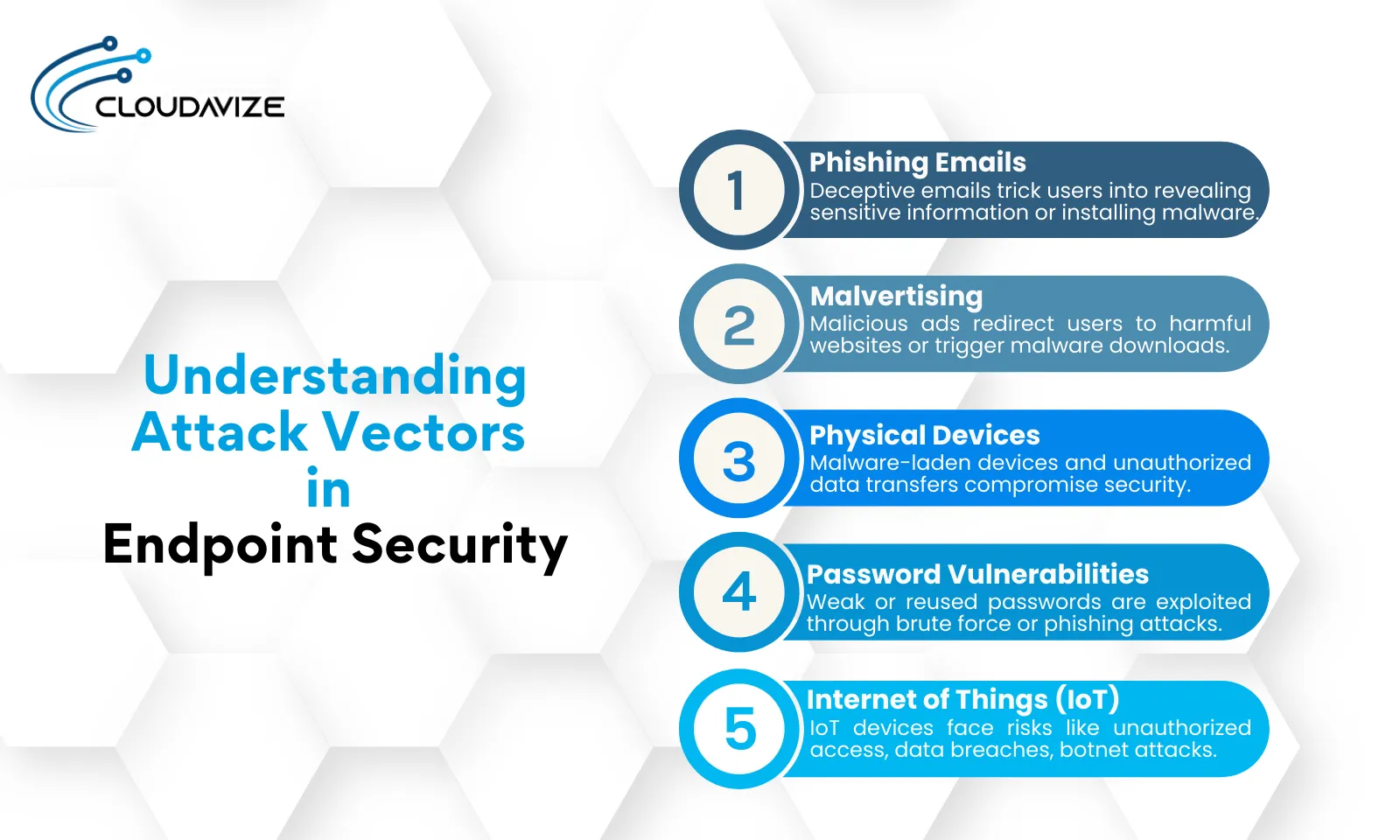
Understanding attack vectors in endpoint security includes phishing emails, malvertising, physical devices, password vulnerabilities, and the Internet of Things. Attack vectors are the pathways or methods cybercriminals use to infiltrate endpoint devices and networks, exploiting vulnerabilities to compromise data and system integrity.
Phishing Emails
Phishing is a cyberattack method that involves tricking recipients into revealing sensitive information or installing malware through deceptive emails. These attacks often use deceptive links, fake websites, and social engineering tactics. According to Ponemon Institute research, 68% of firms had suffered one or more endpoint assaults that successfully compromised data and/or IT infrastructure, with attacks against endpoints being among the most common. Email security measures like spam filters, employee training, and multi-factor authentication are essential to combat phishing attacks.
Digital Advertising (Malvertising)
Malvertising, or malicious advertising, operates within digital advertising to spread malware. It involves methods like redirecting users to malicious websites and automatic malware downloads. According to Webroot research, 83% of malware threats are kept in one of four locations: %tmp%, %appdata%, %cache%, and %desktop%. Prevention strategies include using ad-blockers, updating software, and employing web security solutions to block malicious ads and ensure a safe browsing experience.
Physical Devices (USBs and Removable Media)
Using physical devices like USBs and removable media in endpoint security presents significant risks. Examples of security threats include malware-laden USBs and unauthorized data copying. More than 70% of data loss incidents originate on employee endpoints, highlighting the critical nature of this issue. Organizations should implement strict security policies to mitigate these risks, use endpoint protection software, and educate employees about the dangers of using unknown devices.
Password Vulnerabilities
Password vulnerabilities pose a substantial threat to endpoint security. These vulnerabilities can be exploited through brute force attacks, phishing, and credential stuffing. Best practices to enhance password security include using strong, unique passwords, enabling multi-factor authentication, and regularly updating passwords to prevent unauthorized access.
Internet of Things (IoT)
Due to their widespread use and varying levels of security, IoT devices present unique security challenges. Security risks include unauthorized access, data breaches, and botnet attacks. Effective strategies to secure IoT devices involve using strong passwords, regularly updating firmware, and employing network segmentation to isolate them from critical systems.
Best Practices For Securing Endpoints
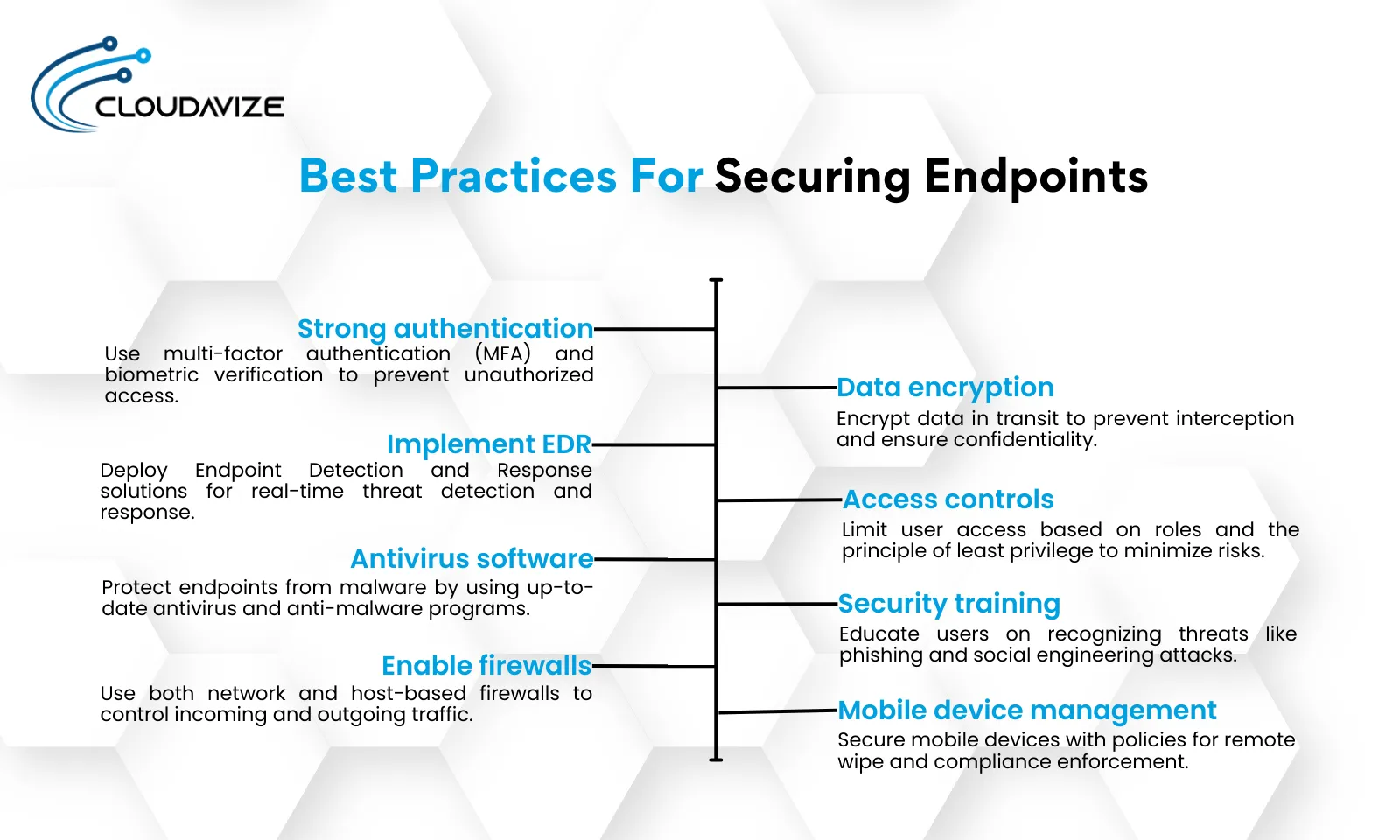
Best practices for securing endpoints range from using strong authentication methods, implementing EDR solutions, and using antivirus software to implementing data encryption, access control, and regular security awareness training. Securing endpoints is essential in protecting organizational data and maintaining the integrity of network systems. Implementing robust security measures can prevent unauthorized access and safeguard against cyber threats.
Use Strong Authentication Methods
Strong authentication methods are crucial for preventing unauthorized access and reducing the risk of credential theft. Multi-factor authentication (MFA) and biometric verification significantly enhance security by requiring multiple verification methods before granting access. Implementing these methods ensures that even if one credential is compromised, additional layers of security protect sensitive information.
Implement EDR Solutions
Endpoint Detection and Response (EDR) solutions are vital for monitoring endpoint activity to detect, investigate, and respond to suspicious behavior. EDR solutions provide real-time visibility and advanced threat detection capabilities. They continuously analyze endpoint data, allowing security teams to identify and mitigate threats quickly, reducing potential damage and maintaining endpoint integrity.
Use Antivirus and Anti-Malware Software
Antivirus and anti-malware software are necessary for protecting endpoints from malicious software. These programs detect and remove various types of malware, including viruses, ransomware, and spyware. Updating this software is crucial for combating new threats and ensuring endpoints are protected against the latest cyber risks.
Enable Firewalls
Firewalls are critical in securing endpoints by controlling incoming and outgoing network traffic based on predetermined security rules. Network-based firewalls protect the entire network, while host-based firewalls provide an additional layer of defense at the endpoint level. Using both types of firewalls creates multiple layers of protection, enhancing overall security.
Use Data Encryption for Transit
Data encryption, particularly for data in transit, is essential for preventing data interception and ensuring data integrity and confidentiality. Encryption protocols like SSL/TLS and VPNs protect data as it moves across networks, making it unreadable to unauthorized parties. This measure is crucial for safeguarding sensitive information during transmission.
Implement Access Controls and Least Privilege Practices
Access controls and the principle of least privilege are fundamental for limiting user access to necessary resources only. This practice reduces the risk of internal threats and data breaches. Role-based access control (RBAC) and identity management systems help manage and enforce these policies, ensuring users have appropriate access levels.
Conduct Regular Security Awareness Training for Users
Regular security awareness training for users is vital in helping employees recognize and respond to security threats. Training topics should include phishing attempts, social engineering attacks, and other common threats. Engaging and informative sessions ensure that users stay vigilant and informed about the latest security practices.
Use Mobile Device Management (MDM) for Portable Devices
Mobile Device Management (MDM) solutions are critical for securing portable devices such as smartphones and tablets. MDM helps enforce security policies, remotely wipe data if devices are lost or stolen, and ensure compliance with security standards. Securing mobile devices is increasingly important due to their widespread use and vulnerability to cyber threats.
Utilize Cybersecurity Management Services for Robust Protection
Cybersecurity management services deliver a comprehensive endpoint protection strategy by integrating advanced monitoring, proactive threat detection, and effective response solutions. These services are designed to adapt and evolve, ensuring businesses remain resilient against emerging cyber threats.Cloudavize specializes in creating tailored cybersecurity solutions to meet diverse organizational needs. Their offerings include endpoint protection, access control implementation, and state-of-the-art threat detection tools, ensuring robust security for your digital assets.
What Should You Look for in an Endpoint Protection Platform?
In an endpoint protection platform, you should look for various factors, including comprehensive protection, real-time threat detection and response, a user-friendly interface, scalability, and compatibility. Selecting the right Endpoint Protection Platform (EPP) is critical for enhancing overall endpoint security and meeting an organization’s specific needs.
- Comprehensive Protection: Comprehensive protection is crucial for endpoint security as it covers many threats, including malware, ransomware, phishing, and Advanced Persistent Threats (APTs). Multi-layered security features improve threat detection and reduce the risk of breaches. An EPP with comprehensive protection ensures that endpoints are safeguarded against diverse cyber threats, maintaining the integrity and security of organizational data.
- Real-Time Threat Detection and Response: Real-time threat detection and response are vital for effective endpoint security. Machine learning and behavioral analysis enable quick identification and mitigation of threats. Real-time capabilities offer significant benefits, including faster threat identification, quicker mitigation, and reduced impact of security incidents, ensuring continuous protection.
- User-Friendly Interface and Centralized Management: A user-friendly interface is essential for effective endpoint management. Centralized management streamlines operations and improves oversight by allowing administrators to monitor and secure all endpoints from a single console. This reduces administrative overhead and enhances overall efficiency, making endpoint management more straightforward and effective.
- Scalability and Compatibility: Scalability and compatibility are crucial for growing organizations. An EPP should support diverse endpoints, integrate seamlessly with existing systems, and handle increased data volumes. Cloud-based platforms and solutions with broad device support exemplify scalability and compatibility, ensuring that the EPP can grow with the organization’s needs.
- Performance Impact: Evaluating the performance impact of an EPP on endpoint devices is essential to balance security with performance. Criteria include resource usage, system slowdown, and user experience. Optimizing settings, using lightweight agents, and conducting regular performance assessments help minimize the performance impact while maintaining robust security.
- Reporting and Analytics: Comprehensive reporting and analytics are essential for maintaining a strong security posture. Features to look for include real-time dashboards, trend analysis, and detailed incident reports. EPP solutions excelling in reporting and analytics provide detailed insights and actionable intelligence, helping organizations respond effectively to security incidents.
- Cost and Licensing: Understanding an EPP’s cost and licensing structure is crucial for budgeting and financial planning. Factors to consider include initial costs, ongoing subscription fees, scalability costs, and potential hidden charges. Cost-effective EPP solutions with transparent licensing models ensure organizations can plan their security investments without unexpected expenses.
- Support and Maintenance: Support and maintenance are critical aspects of an EPP. Look for solutions offering 24/7 availability, knowledgeable support staff, and comprehensive service agreements. EPP solutions, known for exceptional support and maintenance services, ensure that organizations have the necessary assistance to address any security issues promptly.
- Behavioral Analysis and Threat Intelligence Integration: Behavioral analysis and threat intelligence are vital for modern endpoint protection. Mechanisms of behavioral analysis and integration with threat intelligence provide proactive security measures. EPP solutions excelling in these areas enhance threat detection and response, ensuring comprehensive protection against sophisticated threats.
- Ease of Deployment and Employee Training: Ease of deployment and thorough employee training are critical for successfully adopting an EPP. Considerations include intuitive setup processes, minimal disruption during deployment, and effective training modules. EPP solutions that are easy to deploy and offer robust training support ensure that employees are well-prepared to use the platform effectively.
FAQs
Are Endpoint Security and Antivirus the same?
No, endpoint security and antivirus are not the same. Antivirus software is a component of endpoint security, which offers a broader range of protective measures, including threat detection, firewall protection, and real-time monitoring, to safeguard endpoint devices comprehensively.
Difference Between Endpoint Security Vs. Network Security ?
Endpoint security protects individual devices, such as laptops, desktops, and mobile devices, from cyber threats, whereas network security secures the entire network infrastructure, including routers, switches, and servers, to prevent unauthorized access and attacks.
Is VPN an Endpoint Security?
No, a VPN is not an endpoint security solution. It is a tool that provides secure, encrypted connections for remote access but does not encompass the full range of protective measures offered by endpoint security solutions, such as malware detection, threat response, and data encryption for endpoints.