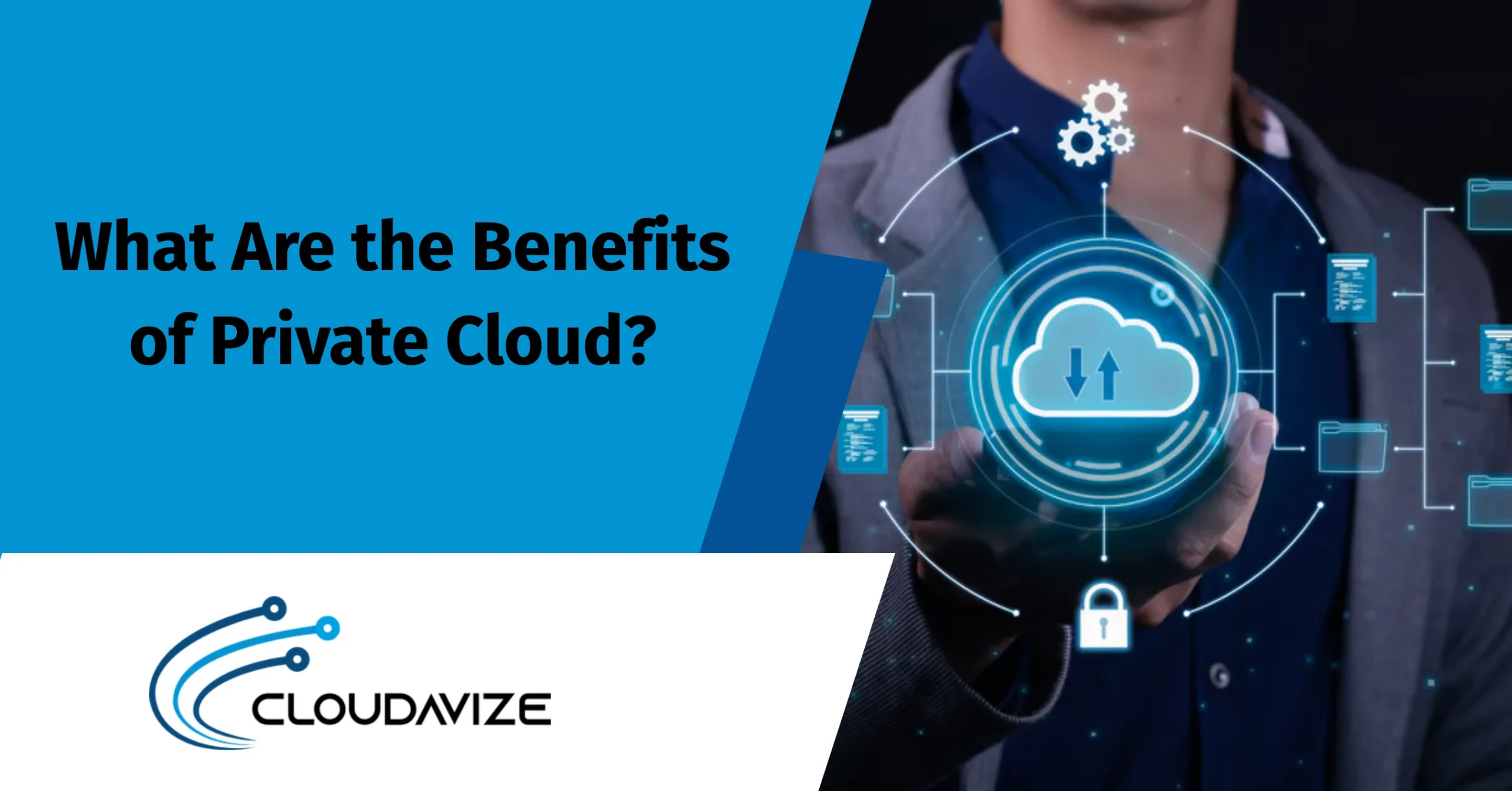
What Are the Benefits of Private Cloud?
Private cloud storage offers organizations secure, dedicated, and highly controllable storage solutions that make data management efficient, compliant, and reliable. These benefits are particularly valuable for large enterprises, highly regulated industries such as healthcare, finance, and government, and businesses with mission-critical, data-intensive workloads. Dedicated infrastructure allows organizations to maintain strict control over data, applications, and IT resources while ensuring consistent performance and regulatory compliance.
With private cloud storage, organizations can implement custom security controls, support legacy applications, and protect critical information from cyber threats or hardware failures. Isolated resources deliver predictable performance, operational stability, and scalable capacity, allowing businesses to adapt quickly to growing or fluctuating workloads.
Beyond security and control, private cloud storage enhances business continuity through built-in disaster recovery, comprehensive visibility into infrastructure, and flexible resource allocation. This ensures optimized management, reduced operational risk, and alignment with long-term technology strategies. For organizations handling sensitive or mission-critical data, private cloud storage provides a resilient, secure, and compliant environment that supports ongoing operations and future growth.
8 Key benefits of private cloud are:
- Enhanced Security: Provides dedicated infrastructure, reducing exposure to external users and improving data protection.
- Greater Customization: Allows organizations to tailor hardware, software, and configurations to specific needs.
- Improved Compliance: Helps meet regulatory requirements by keeping data within controlled environments.
- Better Performance and Reliability: Delivers consistent performance since resources are not shared with other organizations.
- Cost Predictability: Offers stable, predictable costs due to fixed infrastructure and reduced usage variability.
- Scalability: Enables flexible expansion of resources as organizational demands grow.
- Control Over Data and Infrastructure: Gives full administrative control over how data and systems are managed.
- Support for Legacy Applications: Enables older applications to run smoothly in a controlled, compatible environment.
What is Private Cloud?
A private cloud is a dedicated cloud computing environment used exclusively by a single organization. It provides businesses with isolated infrastructure, allowing them to manage applications, data, storage, and networking resources within a controlled environment. Private cloud infrastructure can be hosted on-premises or delivered by a third-party provider such as a Managed Service Provider (MSP) while remaining fully dedicated to a single organization. This setup gives businesses greater visibility, security control, and customization over their IT operations.
Organizations use private cloud environments to support workloads that require high security, stable performance, and regulatory compliance. Businesses can configure infrastructure to meet operational requirements, apply custom access controls, and scale resources as demand changes. Private cloud also supports disaster recovery, business continuity, and integration with legacy applications. Industries such as healthcare, finance, government, and enterprise technology often adopt private cloud solutions to maintain secure and reliable operations while retaining full control over sensitive business data.
What Are the Main Benefits of Private Cloud?
The main benefits of private cloud for businesses, especially SMBs (Small and Midmarket Businesses), are enhanced security, greater customization, improved compliance, reliable performance, predictable costs, scalability, direct infrastructure control, and support for legacy applications. Dedicated infrastructure protects sensitive data, optimizes resources, and ensures stable performance for critical workloads. Private cloud also supports compliance, business continuity, and future scalability. Financial institutions, healthcare organizations, and legal firms particularly benefit from their stringent regulatory and security requirements.
Enhanced Security
Private cloud environments enhance security through dedicated infrastructure, isolated resources, and advanced access controls. Financial institutions and healthcare providers gain strong protection for sensitive data and critical workloads through customized identity and access management (IAM), firewalls, and encryption. These features reduce risks associated with misconfiguration and manual errors, which account for more than 31% of cloud breaches, and address vulnerabilities that are particularly common in public cloud infrastructures, where 27% of businesses report security incidents (source: SentinelOne Global Cloud Security Threat Intelligence Report). Private clouds therefore offer stronger protection, greater control, and reliable security for organizations handling critical or regulated information.
Greater Customization
By allowing businesses to customize hardware, software, and networking components to meet operational requirements, private cloud platforms provide greater flexibility and control. Tech companies and media firms gain the ability to allocate processors, storage, and memory for AI workloads, enterprise databases, or creative projects. Custom security controls and encryption support compliance, while compatibility with legacy applications allows organizations to manage specialized workloads efficiently. This flexibility ensures optimized performance, tailored infrastructure management, and reliable execution of complex operational tasks, meeting the unique demands of innovative, data-intensive industries.
Improved Compliance
Regulatory compliance is easier to manage in a private cloud environment built on controlled infrastructure and strong data governance. Legal firms, healthcare providers, and financial institutions benefit from greater control over where data is stored, processed, and accessed. Custom security measures and centralized visibility help organizations meet standards such as HIPAA, GDPR, PCI DSS, and FedRAMP. Simplified audits, reporting, and monitoring further reduce legal and operational risks. By centralizing compliance management, private cloud environments help organizations maintain oversight of sensitive information, minimize exposure to penalties, and strengthen regulatory adherence and operational trust.
Better Performance and Reliability
Private cloud offers high-performance infrastructure with dedicated processing power, storage, and network bandwidth. Tech companies and media platforms benefit from stable, responsive performance for databases, analytics, and enterprise applications. Reliable systems minimize disruptions, maintain business continuity, and ensure productivity across daily operations. Workloads can be optimized, disaster recovery strategies implemented, and maintenance scheduled according to priorities. Dedicated infrastructure supports uninterrupted operations, enabling organizations to deliver consistent services and maintain dependable performance for critical applications and customer-facing services.
Cost Predictability
Private cloud provides predictable costs through fixed or transparent pricing models. SMBs and remote-first businesses benefit from planning IT budgets with confidence, avoiding the unexpected charges often seen on public cloud platforms. Predictable expenses simplify long-term planning, especially for ongoing workloads such as application hosting or data processing. Organizations can allocate resources strategically without overspending, maintaining operational efficiency. Cost predictability also allows enterprises to align technology investments with business goals while minimizing financial risk, making the private cloud a stable and reliable infrastructure solution.
Scalability
Growing businesses can efficiently scale computing, storage, and network resources through a scalable private cloud infrastructure. Growing businesses benefit from rapid provisioning during new service launches, seasonal traffic peaks, or expanding datasets. Scalable infrastructure supports operational stability while maintaining uninterrupted business operations. Organizations can respond to changing workloads, optimize resource allocation, and implement disaster recovery measures effectively. This flexibility ensures that enterprises can grow seamlessly, support digital transformation initiatives, maintain service reliability, and efficiently manage evolving business and IT demands without disruption.
Control Over Data and Infrastructure
Greater control over data, infrastructure, and security configurations helps organizations align IT environments with business needs. Healthcare providers and legal firms benefit from custom access permissions, data residency controls, and infrastructure settings aligned with governance standards. Dedicated resources ensure predictable performance while reducing risks associated with unauthorized access or inconsistent workloads. This level of control supports secure operations, compliance requirements, and long-term IT planning. It also strengthens operational stability and enables organizations to manage sensitive data effectively while implementing strategic initiatives.
Support for Legacy Applications
Organizations dependent on legacy applications can maintain operational continuity through an infrastructure designed for compatibility and flexibility. Financial institutions and enterprise companies can avoid disruptive migrations while keeping existing databases, operating systems, and enterprise software fully functional. Virtualized environments help optimize workloads and simplify management without affecting stability or performance. This approach allows organizations to modernize IT systems gradually, preserving existing workflows while adopting new technologies at their own pace. As a result, enterprises maintain reliable access to critical applications while steadily advancing their digital transformation initiatives.
What Are the Benefits of Private Cloud for Small and Midmarket Businesses?
Private cloud offers small and midmarket businesses (SMBs) a secure, dedicated, and highly customizable IT environment that provides greater control over data, applications, and infrastructure. By operating within a single-tenant environment, businesses can enhance security, maintain consistent performance, support regulatory compliance requirements, and tailor resources to their specific operational needs. Private cloud solutions also help organizations improve business continuity, manage critical workloads more effectively, and scale resources as business demands evolve, making them a reliable foundation for long-term growth and operational efficiency.
12 Key Benefits of Private Cloud for SMBs:
- Enhanced Security: Dedicated infrastructure, advanced encryption, and customized security policies help protect sensitive business data.
- Regulatory Compliance Support: Assists organizations in meeting industry standards and regulations, including HIPAA, PCI DSS, and other compliance requirements.
- Dedicated Resources: Computing, storage, and networking resources are reserved for a single organization, ensuring predictable performance.
- Greater Control and Customization: Businesses can tailor infrastructure, applications, and security settings to meet specific operational needs.
- Improved Performance and Reliability: Isolated environments reduce resource contention and support consistent application performance.
- Support for Legacy Applications: Private cloud infrastructure can be customized to accommodate specialized, legacy business systems.
- Scalability: Resources can be expanded or adjusted as business demands change, supporting growth without major infrastructure disruptions.
- Disaster Recovery and Business Continuity: Built-in backup and recovery capabilities help minimize downtime and protect critical data.
- Better Infrastructure Management: Increased visibility and control simplify monitoring, maintenance, and optimization of IT resources.
- Operational Flexibility: Supports specialized workflows and industry-specific requirements while adapting to changing business needs.
- Long-Term Growth Alignment: Enables SMBs to build a stable, secure IT foundation that evolves with organizational goals.
- Reduced Risk of Service Disruptions: Dedicated environments offer greater stability and mitigate the impact of fluctuations in external resources.
What Factors Influence the Benefits of Private Cloud?
The benefits of private cloud are influenced by cloud deployment type, data security levels, compliance requirements, system integration, scalability needs, infrastructure investment, customization capabilities, and workload management strategies. Organizations gain the most value when private cloud environments align with operational goals, regulatory requirements, and long-term business needs. These factors determine how effectively businesses can maintain security, performance, flexibility, and control within their cloud computing infrastructure. Organizations may choose MSP-managed private cloud solutions or self-managed on-premises environments.
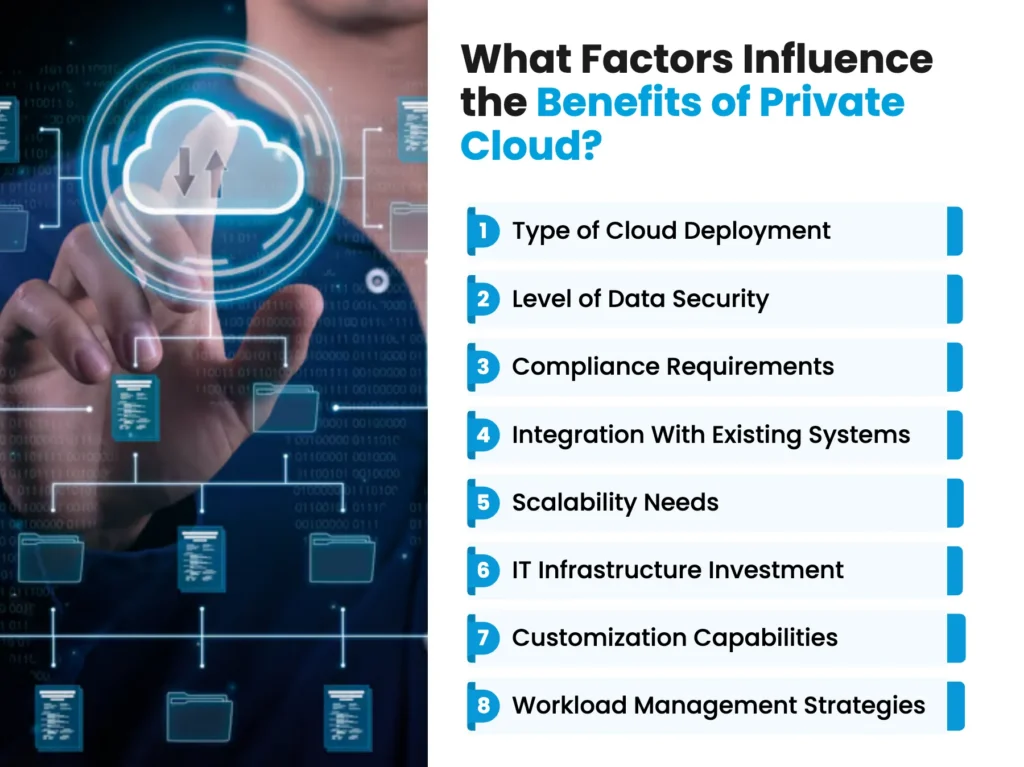
8 factors influencing the benefits of private cloud are:
- Type of Cloud Deployment
Private cloud benefits vary based on whether organizations use on-premises or hosted deployment models. Enterprises in healthcare and finance often choose on-premises deployments for full control over sensitive data. Hosted solutions benefit remote-first businesses and tech companies requiring flexible scalability. This decision affects control over infrastructure, data location, and security management. Organizations may choose MSP-managed or self-managed on-premises deployments based on security, operational needs, and regulatory requirements. - Level of Data Security
Security requirements strongly influence the advantages of private clouds, especially for organizations handling sensitive data. Financial institutions, legal firms, and healthcare providers benefit from high security standards. Features like encryption, access control, and isolation help reduce risks and improve protection. Higher security levels increase trust and make the private cloud better suited to critical workloads, ensuring operational reliability and regulatory compliance. - Compliance Requirements
Compliance needs shape how private cloud systems are designed and managed. Healthcare, finance, and government organizations rely on strict controls to meet standards like HIPAA, GDPR, and FedRAMP. These requirements ensure proper data handling, auditing, and regulatory alignment within cloud environments, reducing legal and operational risks. - Integration With Existing Systems
The ability to integrate with existing infrastructure affects the effectiveness of private clouds. Tech companies and enterprise organizations benefit from smooth compatibility with legacy applications and on-premises systems. This reduces migration challenges and maintains operational continuity, allowing modernization without disrupting ongoing business processes. - Scalability Needs
Scalability requirements determine how efficiently private cloud resources can adapt to changing workloads. Growing businesses, e-commerce platforms, and big data enterprises benefit from dynamically scaling capacity up or down. This flexibility supports both long-term growth and short-term demand fluctuations while maintaining stable performance. - IT Infrastructure Investment
Investment levels influence the overall benefits of private cloud adoption. Large enterprises and tech companies gain better control, stability, and customization from upfront investments. While costs are higher initially, they provide long-term efficiency and infrastructure tailored to business needs, improving performance and reliability. - Customization Capabilities
Customization enhances the value of private clouds by allowing organizations to configure systems to meet specific workloads and policies. Healthcare providers, legal firms, and media companies benefit from adjusting hardware, software, and security settings. Customization ensures specialized requirements are met while supporting compliance, efficiency, and operational flexibility. - Workload Management Strategies
Workload management affects performance and efficiency in private cloud environments. Big data platforms, financial institutions, and tech enterprises benefit from proper allocation of resources to ensure critical applications run smoothly. Effective workload management improves reliability and maintains consistent system performance across complex operations.
How to Maximize the Benefits of Private Cloud for Your Business?
Businesses maximize the benefits of private cloud by aligning the environment with workload demands, security policies, compliance requirements, and long-term IT goals. This includes choosing the right deployment model, setting clear access controls, allocating resources properly, monitoring performance, and planning capacity before workloads increase. A well-planned private cloud setup helps organizations improve data protection, maintain reliable application performance, support regulatory needs, and reduce operational risks.
To get the best results, businesses need proper architecture, secure implementation, ongoing maintenance, and expert infrastructure management. Working with a trusted cloud service provider helps reduce setup complexity, strengthen security oversight, and keep the private cloud environment aligned with changing business needs. This approach supports secure operations, compliance readiness, predictable performance, and scalable IT growth.