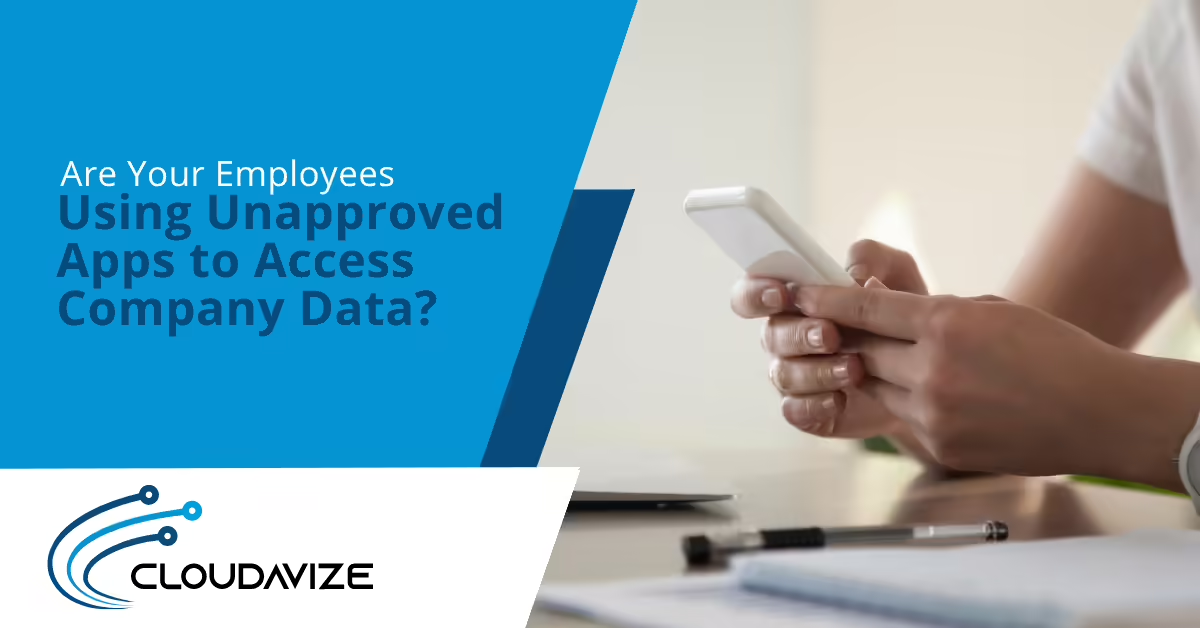
Are Your Employees Using Unapproved Apps to Access Company Data?
Article summary: Employees often turn to unapproved apps when company tools don’t meet their needs, putting sensitive business data at risk. Identifying unauthorized applications, providing approved alternatives, and managing app permissions can help businesses regain control of their data without disrupting productivity.
It’s 4:45 on a Friday, and a project manager needs to send 300 MB of drawings to a subcontractor. The files are too large for email, so she uploads them to her personal cloud storage account and shares the link.
Problem solved. Except IT has no idea the files were shared, and sensitive company information now sits in an account the business doesn’t control.
This is how unapproved apps quietly put company data at risk. Employees rarely intend to create security problems. They’re simply looking for a quick solution when their usual tools fall short.
Why Unapproved Apps at Work Are So Common
Known as shadow IT, this happens when employees use software, cloud services, or devices for work without IT’s knowledge or approval.
Common examples include personal cloud storage accounts, WhatsApp groups for client communications, free PDF converters, and note-taking apps that sync to personal devices.
These tools are often free, easy to access, and quick to set up. Some even allow employees to sign in using their work credentials, making them seem legitimate despite lacking IT approval.
Most employees aren’t deliberately bypassing security. They’re simply looking for faster, easier ways to complete their work when approved tools don’t meet their needs.
What Happens to Company Data in Apps You Don’t Manage
The biggest concern with unapproved apps isn’t necessarily the software itself. It’s losing control over where company information is stored, who can access it, and how it’s protected.
Company Files Can Leave with Employees
When employees store business documents in personal accounts, those files may remain accessible even after they leave the company.
IT can’t directly revoke access to accounts it doesn’t manage, potentially leaving confidential information outside the company’s control. This makes it especially important to securely offboard contractors and freelancers who may have access to sensitive data.
Unapproved Apps Can Expose Business Data
Unapproved AI tools create additional risks for company data. According to Verizon’s 2026 Data Breach Investigations Report, regular employee use of AI tools on corporate devices increased from 15% to 45% in one year. The report also found that 67% of AI users accessed these platforms through noncorporate accounts
When employees enter sensitive information into AI tools that IT doesn’t manage, businesses may have little visibility into how that data is stored, processed, or shared.
Unmanaged Data Creates Security Blind Spots
Information stored outside company-approved systems can escape routine security monitoring, backups, and access controls.
Known as shadow data, this information can be difficult to track and protect. According to IBM’s 2026 Cost of a Data Breach Report, only 37% of breached organizations reported encrypting sensitive data both at rest and in transit.
When businesses don’t know where sensitive information is stored, they have a harder time protecting it, detecting unauthorized access, or responding to a breach.
Unapproved Communications Can Create Compliance Problems
Businesses in regulated industries may be required to retain certain communications, even when employees use personal messaging apps.
In January 2025, 12 financial firms agreed to pay $63.1 million to settle SEC charges involving failures to preserve electronic business communications.
Other businesses, including accounting and law firms, may face their own recordkeeping and confidentiality obligations. When employees discuss client matters through unapproved channels, preserving or retrieving those communications can become difficult.
How to Find Out What Your Team Is Using
Identifying unapproved apps doesn’t have to involve a costly security audit. Start with these four steps:
- Ask employees what they’re using. An anonymous survey can reveal which tools employees rely on and why they prefer them over approved alternatives. Keep the conversation focused on improving workflows rather than assigning blame.
- Review third-party app permissions. Check Microsoft Entra ID to see which applications have been granted access to company resources, including email, calendars, and files. Look for unfamiliar apps or permissions that exceed business needs.
- Monitor cloud application usage. Tools like Microsoft Defender for Cloud Apps can identify cloud services employees access and assess their potential security risks.
- Examine expense reports. Recurring charges on company credit cards may reveal software subscriptions purchased without IT approval.
How to Rein in Shadow IT Without Slowing People Down
Banning unapproved apps outright can push employees to use them without telling IT. A better approach is to make approved tools easy to access and use.
- Create an approved app list. Give employees clear alternatives for common tasks, such as OneDrive or SharePoint for file sharing and Teams for internal communication.
- Control third-party app permissions. Configure Microsoft Entra ID to restrict which applications employees can authorize. Microsoft recommends limiting user consent to verified publishers and selected low-risk permissions, with other requests requiring administrative review.
- Simplify the approval process. Employees are more likely to follow the rules when they can get the tools they need quickly. A streamlined AI approval process offers a useful model.
- Evaluate new tools before approval. Use a vendor risk checklist to assess security practices, data handling, and potential compliance concerns.
- Review approved apps regularly. Reassess your list quarterly to identify outdated tools and address changing business needs.
Do You Know Where Your Company Data Lives Right Now?
Employees often turn to unapproved apps because they need a faster way to get work done. But when company information ends up in unmanaged accounts, businesses lose visibility and control over sensitive data.
Identifying these tools, providing approved alternatives, and managing application permissions can significantly reduce the risks of shadow IT.
Cloudavize helps Dallas-Fort Worth businesses identify unauthorized applications and establish practical security controls without disrupting productivity. Call (469) 250-1667 or contact us online to schedule a consultation.
Article FAQs
What is shadow IT?
Shadow IT refers to software, cloud services, or devices employees use for work without IT’s knowledge or approval. Examples include personal file-sharing accounts, unauthorized messaging platforms, and unapproved AI tools.
Why are unapproved apps a security risk?
Unapproved apps can expose sensitive company information to unauthorized access, data loss, and compliance violations. Because IT doesn’t manage these tools, business data may fall outside normal security monitoring, backup, and access controls.
How can I find out which apps my employees use?
Start by asking employees which tools they use and why. You can also review third-party application permissions in Microsoft Entra ID and use cloud discovery tools to identify services accessed through your network.