IT Best Practices Checklist A Complete Guide for Secure and Efficient IT Operations
An unstructured IT environment exposes small businesses and startups to security breaches, compliance failures, and operational setbacks. Without a clear IT framework, organizations struggle with weak access controls, outdated systems, and inefficient workflows, increasing the risk of cyber threats and costly downtime. A comprehensive IT best practices checklist ensures that security, infrastructure, support, and compliance measures are systematically enforced to maintain stability and efficiency.
This IT best practices checklist focuses on critical IT components, including multi-factor authentication, network monitoring, disaster recovery planning, regulatory adherence, and IT governance. By integrating proactive security protocols, streamlined IT policies, and automated risk assessments, businesses can enhance resilience, optimize performance, and safeguard their technology ecosystem against emerging threats and disruptions.
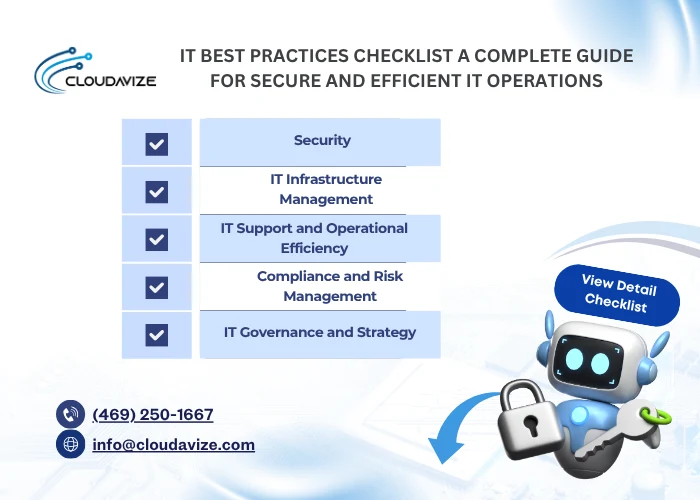
6 Key Components In an IT Checklist For SMBs and Startups?
The 6 key components of an IT checklist for small businesses and startup include data security, IT infrastructure management, IT support and operational efficiency, compliance and risk management, and IT governance and strategy. Organizations should maintain a structured IT checklist to ensure secure, efficient, and compliant IT operations, helping them align IT practices with business goals. Following a standardized IT framework allows companies to optimize IT performance and enhance productivity while mitigating security risks and ensuring regulatory compliance.
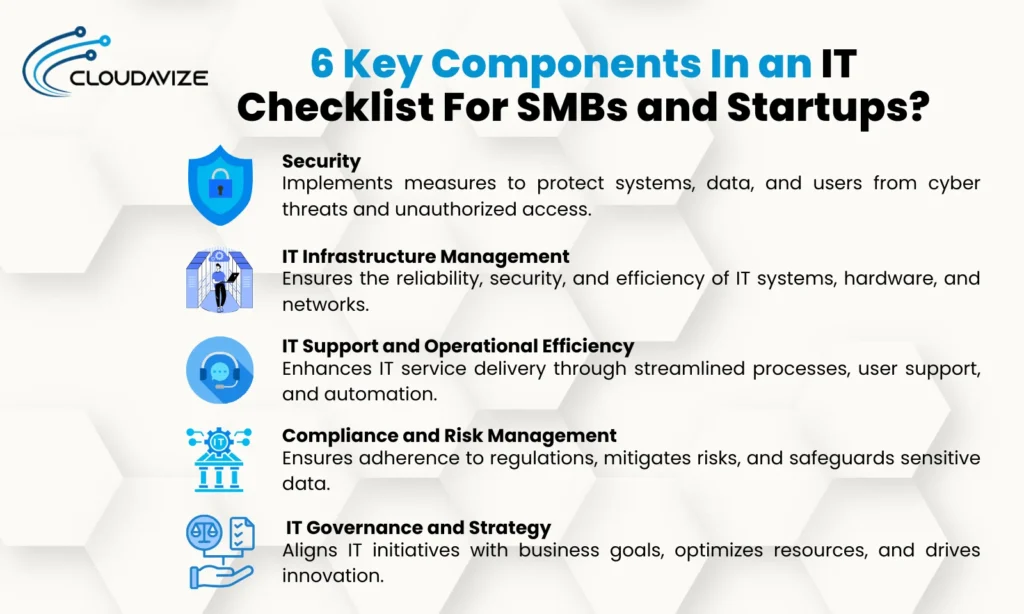
Below are the 6 main components that make up an IT checklist.
1. Security
- Implement Multi-Factor Authentication (MFA): Enforcing multiple authentication for all user logins enhances account security. It adds an extra layer of protection that requires multiple verification methods before letting someone in. This helps keep accounts secure even in case of misused or stolen passwords.
- Use Strong Password Policies: By implementing the creation of complex passwords for all employees, including uppercase letters, numbers, and special characters, organizations can reduce the risk of credential theft. This practice shifts the norm from using simple ‘Johndoe123’ or ‘123Password’ to ‘D$895rEsTpl%.’ Also, implementing period password changes and avoiding reuse further strengthens account security.
- Keep Software and Systems Updated: Regular security patches and software updates help prevent exploitation of known vulnerabilities. Automated patch management tools like SolarWinds Patch Manager or ManageEngine Patch Manager Plus are invaluable for small businesses aiming to stay up-to-date with minimal manual intervention.
- Implement Firewall and Antivirus Protections: Configuring firewalls helps monitor network traffic, block unauthorized access, and detect and remove malicious files from IoT devices. It also required deployment of the endpoint security solutions like antivirus, anti-malware, and access control to safeguard the system, the IT infrastructure, and the network from malware, ransomware, and other cyber threats.
- Encrypt Data: Using data encryption secures sensitive information both at rest and in transit. It converts data into a code that requires a decryption key to decode the information, ensuring data safety even if intercepted. Organizations can use encryption algorithms like RSA, DES, and ECC for top-tier data protection.
- Regular Security Audits: Conducting frequent security assessments, vulnerability scans, and penetration testing by the internal IT team or external security auditors help identify weaknesses and validate existing security measures. This allows small businesses to implement corrective action to make the security system robust and impenetrable while ensuring adherence to industry-specific regulations.
- Access Control Management: Organizations should follow the principle of least privilege (PoLP) and limit user access to the resources required for their roles. They can implement role-based access control (RBAC) to manage permissions effectively, reducing the risk of data breaches and security incidents. Also, regularly reviewing and removing unnecessary access can further prevent unauthorized access.
- Incident Response Plan: Developing a structured incident response plan (IRP) enables organizations to prepare for, detect, analyze, contain, eradicate, and recover from security incidents or disruptions, reducing the impact of security breaches. It requires testing and updating the plan to evade and recover from security threats, limiting operational, financial, and reputational damage.
- Security Awareness Training: Training employees on phishing scams, social engineering tactics, cloud security, and cybersecurity practices reduces human errors, resulting in lower security breaches. It educates staff about their roles in preventing security breaches and reduces the likelihood of security incidents. Providing hands-on training and ongoing support helps create a secure and resilient environment.
2. IT Infrastructure Management
- Regular System Backups: Regular system backups in multiple secure locations keep sensitive information and critical data safe from physical damage. Having multiple copies allows organizations to restore lost or corrupted data quickly without disrupting IT operations. To ensure data integrity and reliability, it is preferred to back up data once a week through an automated system.
- Cloud Security Management: Protecting cloud resources by implementing risk assessment, access control, data encryption, and incident response keeps security threats at bay. Continuous monitoring of network security helps detect real-time threats and mitigate financial losses. It also automates security processes to minimize human error.
- Network Monitoring: Deploying real-time network monitoring tools such as Datadog, Nagios, and Zabbix, tracks network performance and security, detecting anomalies and potential threats. Network monitoring protocols like SNMP and ICMP monitor network traffic and provide visibility into the network to optimize performance and efficiency. Using intrusion detection systems (IDS) allows organizations to analyze network activity and prevent cyberattacks.
- Hardware Lifecycle Management: Managing hardware from purchase to disposal helps track and maintain hardware. It helps establish upgrade and replacement policies for outdated hardware to prevent data breaches. Proper management ensures cost savings, improves efficiency, enhances security, and reduces waste.
- Disaster Recovery Planning: Developing and testing a disaster recovery plan ensures data redundancy and business continuity during system failures. Business impact analysis (BIA) helps determine the IT system’s criticality and prioritize recovery efforts. Small Businesses depend on backup and restore plans and Disaster Recovery as a Service (DRaaS) to ensure data safety and mitigate downtime.
- Standardized IT Policies: Developing clear IT policies covering acceptable use, disaster recovery, remote work guidelines, and BYOD protocols, enforces IT security and proper data and change management. It helps meet necessary standards like ISO 27000 and NIST SP 800-53 while ensuring effective management and approval of change to IT systems.
- Asset Management: Maintaining an updated inventory of assets, including hardware, software, licenses, and cloud resources, establishes efficient tracking, compliance, and cost control. This allows organizations to identify underutilized assets, reduce idle time, prevent waste, lower maintenance costs, maintain licensing agreements, extend asset lifespan, and mitigate risks.
3. IT Support and Operational Efficiency
- Ticketing System Implementation: Using an IT ticketing system provides a centralized system for logging, tracking, and prioritizing support requests. This helps streamline operations and processing, eventually leading to personalized service and improved customer satisfaction. Automating the ticketing system also helps reduce staff and save money.
- Define SLAs (Service Level Agreements): Establishing clear SLAs set response and resolution time expectations for IT support with vendors. Clearly defined objectives help manage customer expectations, facilitate open communication, clarify roles and responsibilities, determine accountability, and provide transparency. Organizations must monitor SLA compliance periodically to ensure consistent service quality.
- Knowledge Base Management: Maintaining a knowledge base within an organization helps accumulate, store, and share information easily with different departments. It ensures that everyone has access to the information, avoiding information silos. FAQs and general guides available to customers help reduce support request volume and develop a culture of self-service for common IT issues.
- Proactive Maintenance: Scheduling routine system maintenance and software updates prevents potential failures. Regularly inspecting, servicing, and monitoring equipment health helps identify and address issues before they escalate, minimizing breakdown frequency, reducing downtime, extending equipment life, and lowering repair costs.
- User Training and Support: Offering regular training sessions on IT tools, cybersecurity protocols, and best practices helps employees use IT infrastructure efficiently, improving productivity, enhancing security, and reducing IT support workload.
5. Compliance and Risk Management
- Adhere to Regulatory Standards: Conducting regular compliance audits helps organizations adhere to GDPR, HIPAA, SOC 2, or other industry-specific regulations. Complying with safety, environmental, and other regulations avoids legal and financial penalties and ensures a secure working environment.
- Risk Assessment: IT risk assessment enables small businesses to detect vulnerabilities and prioritize mitigation efforts. It identifies and deploys measures to reduce the impact of risks, prevent data breaches, and protect valuable assets. Implementing risk management frameworks like COBIT and OCTAVE focuses on IT governance, control, and management of information security risks.
- Third-Party Vendor Security: Assessing the security posture of external vendors is necessary to verify whether they follow SLAs and contract terms to protect sensitive data and systems accessed through their services. Organizations should ensure the partnered vendor follows security best practices and meets compliance requirements so that potential risks are minimized.
- Data Retention Policy: Defining and enforcing data retention and deletion policies certifies compliance with legal and business requirements. Implementing automated data lifecycle management streamlines this process, avoiding unnecessary data storage costs and reducing potential security risks.
- Log Management and Auditing: Maintaining detailed logs of system access, modifications, and security events as per regulatory compliance improves security posture, addresses security issues quickly, and enhances operational efficiency. Log monitoring tools like Splunk and Graylog are used to detect anomalies and support forensic investigations.
6. IT Governance and Strategy
- Align IT with Business Goals: It is fundamental to ensure that IT strategies align with business objectives and operational priorities. Developing long-term IT roadmaps that support growth and innovation fosters collaboration between IT and business teams and guarantees timely completion of IT tasks.
- Budget and Cost Optimization: To optimize costs, organizations should regularly review IT spending and optimize resource allocation, allowing them to assign finances to other critical areas. They should also use cloud cost management tools, such as AWS Cost Explorer, Cloudability, and Azure Cost Management, to track and control expenses.
- Innovation and Scalability: Investing in scalable IT solutions that can adapt to business expansion and technological advancements increases productivity, enhances operational efficiency, and ensures sustained growth and competitiveness. For flexibility, adopt cloud-based and modular IT architectures that can seamlessly adapt to changing demands.
- Performance Monitoring: Using KPIs and analytics tools to measure IT efficiency, system uptime, and user satisfaction helps identify bottlenecks, optimize resource allocation, and enhance overall IT performance. Establishing continuous improvement initiatives based on performance data ensures proactive problem-solving, drives innovation, and aligns IT strategies with business objectives.
- Collaboration Between IT and Departments: Fostering inter-departmental communication helps align technology solutions with business needs. Implementing collaborative IT governance frameworks ensures stakeholder involvement, enhances transparency, and promotes strategic alignment between IT and organizational goals.
How Can Implementing IT Best Practices Improve Overall Efficiency and Security?
Implementing IT best practices enhances security, improves efficiency, and optimizes IT operations by reducing risks and simplifying processes. By enforcing multi-factor authentication, data encryption, and regular security audits, organizations can protect their data and prevent cyber attacks. Proactive infrastructure management, including network monitoring and automated backups, reduces downtime and system failure while facilitating business continuity.
Standardized IT governance and compliance frameworks support regulatory compliance and risk mitigation, reducing legal and financial liabilities. Similarly, companies with structured IT policies, automated maintenance schedules, and scalable technology will be more productive, cost-effective, and resilient in the long term. Regularly evaluating and updating IT practices will keep you ahead of technology and emerging threats.