
IT consulting is now essential for modern businesses, helping industries like healthcare, finance, manufacturing, retail, and education align technology with their strategic goals. It involves assessing existing systems, identifying inefficiencies, and implementing solutions that improve performance, security, and scalability. By leveraging automation, data analytics, and cloud computing, IT consulting enhances efficiency, reduces costs, and drives innovation while maintaining strong cybersecurity and compliance standards.
These benefits extend across every major sector, as each industry faces unique challenges that require tailored technology solutions. In healthcare, consultants improve patient data management and ensure regulatory compliance. Financial institutions strengthen data security and streamline transactions, while manufacturers use automation and predictive analytics to optimize production and supply chains. No matter the industry, IT consulting adapts to specific operational demands to improve productivity and long-term reliability.
As industries continue to evolve, IT consulting remains a key driver of digital transformation, bridging the gap between strategy and technology. It empowers businesses to modernize their operations, build resilience, and stay ahead of technological disruptions. The following sections explore how different sectors apply IT consulting to achieve measurable success.

Table of Contents
Healthcare
The healthcare industry increasingly relies on IT solutions to manage complex challenges in data management, patient care, and security. Hospitals and clinics handle large volumes of sensitive information that must remain protected under HIPAA regulations while ensuring smooth, accurate care delivery.
IT consulting helps address these needs through systems such as Electronic Health Records (EHR), telemedicine platforms, and secure data management tools. For example, an integrated EHR system allows doctors to access patient histories instantly, reducing errors and improving treatment coordination. These technologies improve efficiency, strengthen data protection, and streamline communication between departments. By modernizing digital infrastructure, IT consulting enhances patient outcomes, reduces costs, and helps deliver safer, more personalized care.
Finance & Banking
Banks and financial institutions rely on IT consulting to manage vast amounts of data and secure millions of daily transactions. This sector faces constant cybersecurity threats, strict compliance requirements, and growing customer expectations for seamless digital banking. A single breach or system failure can severely damage trust and market stability, making a strong IT infrastructure a necessity.
IT consultants help financial organizations design secure systems that meet PCI-DSS and GDPR standards, implement data encryption, and integrate automation for faster processing. For example, IT consulting enables fraud detection systems that analyze real-time transaction data to flag suspicious activity instantly. These improvements reduce risk, enhance compliance, and create safer, more efficient banking experiences for customers.
Manufacturing
Manufacturers face increasing pressure to improve efficiency, minimize downtime, and manage complex supply chains. Many companies struggle to implement technologies such as process automation, predictive maintenance, and inventory optimization effectively. IT consulting helps overcome these challenges by providing strategic guidance and deploying digital tools that modernize production systems and streamline operations.
By integrating IoT sensors, automation software, and predictive maintenance systems, IT consulting enables real-time monitoring and data-driven decision-making. For instance, a smart factory system can detect early signs of equipment failure, allowing managers to schedule maintenance before disruptions occur. These solutions cut expenses, boost productivity, and help manufacturers stay competitive in an increasingly digital market. IT consultants also improve efficiency in the retail sector, as described in the next section.
Retail
Modern retail operations rely on technology to stay competitive in an environment driven by customer expectations, digital sales, and rapid inventory turnover. Retailers face ongoing challenges such as managing supply chains, optimizing inventory, and delivering personalized shopping experiences across physical and online platforms. IT consulting provides the technical expertise to integrate e-commerce systems, customer relationship management (CRM) software, and data-driven insights that streamline retail operations.
Consultants also help retailers implement automation tools, real-time inventory tracking, and secure payment systems that enhance both efficiency and customer satisfaction. These technologies ensure accurate stock management, faster transactions, and more personalized customer engagement. As a result, retailers reduce operational costs, strengthen brand loyalty, and remain agile in a competitive market.
Education
The education sector depends on IT consulting to manage digital learning environments, secure student data, and support institutional management. Schools and universities face challenges in adapting to online learning, integrating Learning Management Systems (LMS), and ensuring the privacy of academic records. To tackle these, IT consultants build scalable digital systems that improve access, simplify administration, and strengthen communication between teachers and students.
Through cloud-based platforms, virtual classrooms, and data analytics, IT consulting improves lesson delivery while reducing administrative burdens. By improving system reliability and data protection, IT consulting supports institutions in offering flexible, secure, and high-quality learning experiences.
Government
Governments are increasingly using technology to modernize services, strengthen data security, and improve citizen engagement. The shift toward e-government solutions allows agencies to automate public services and provide easier access to information. Yet many departments still face challenges with outdated systems, cybersecurity risks, and strict regulatory requirements.
IT consulting helps overcome these issues by modernizing infrastructure, securing data platforms, and introducing smart city technologies that connect systems and departments. These improvements make public services faster, more transparent, and easier to access for citizens. With the right IT guidance, government agencies can operate more efficiently, protect sensitive data, and deliver services with greater accountability and trust.
Energy & Utilities
Rising demand, aging infrastructure, and sustainability goals are pushing the energy and utilities sector to rely more on digital solutions. Managing grid performance, monitoring assets, and maintaining energy efficiency require advanced systems that can process large volumes of real-time data. IT consulting helps modernize such operations through smart grids, automated monitoring, data analytics for energy distribution, and predictive maintenance tools.
By implementing data analytics, IoT devices, and cloud-based platforms, consultants enable better forecasting, faster issue detection, and more sustainable energy use. These solutions increase efficiency, reduce costs, and maintain service continuity while helping energy providers move toward a cleaner, more connected future.
Telecommunications
Modern telecommunications networks depend on IT consulting to manage growing data volumes and maintain fast, reliable connectivity. Providers face challenges such as optimizing performance, reducing downtime, and securing complex communication systems. These demands make continuous modernization essential to meet both business and consumer expectations.
IT consultants strengthen telecom operations through advanced network management systems, cloud integration, and automation. They apply analytics to monitor traffic, predict outages, and optimize bandwidth allocation in real time. These improvements improve service quality by keeping networks stable while operating at lower costs. As connectivity becomes the backbone of digital operations, IT-driven advancements are also transforming how logistics and transportation companies manage efficiency and real-time coordination.
Logistics & Transportation
Efficient movement of goods depends on technology that enables real-time tracking, route planning, and fleet management. The logistics and transportation sector faces challenges such as delivery delays, fuel inefficiency, and supply chain disruptions. IT consulting helps address these issues by designing systems that integrate GPS tracking, automation, and data analytics for better visibility across operations.
Consultants implement tools that optimize routes, monitor vehicle performance, and analyze traffic data to improve reliability and reduce operational costs. These solutions ensure on-time deliveries, minimize resource waste, and enhance coordination across the supply chain. By adopting IT consulting strategies, logistics and transportation companies can achieve greater efficiency, accuracy, and customer satisfaction.
What are the Benefits of IT Consulting Across Industries?
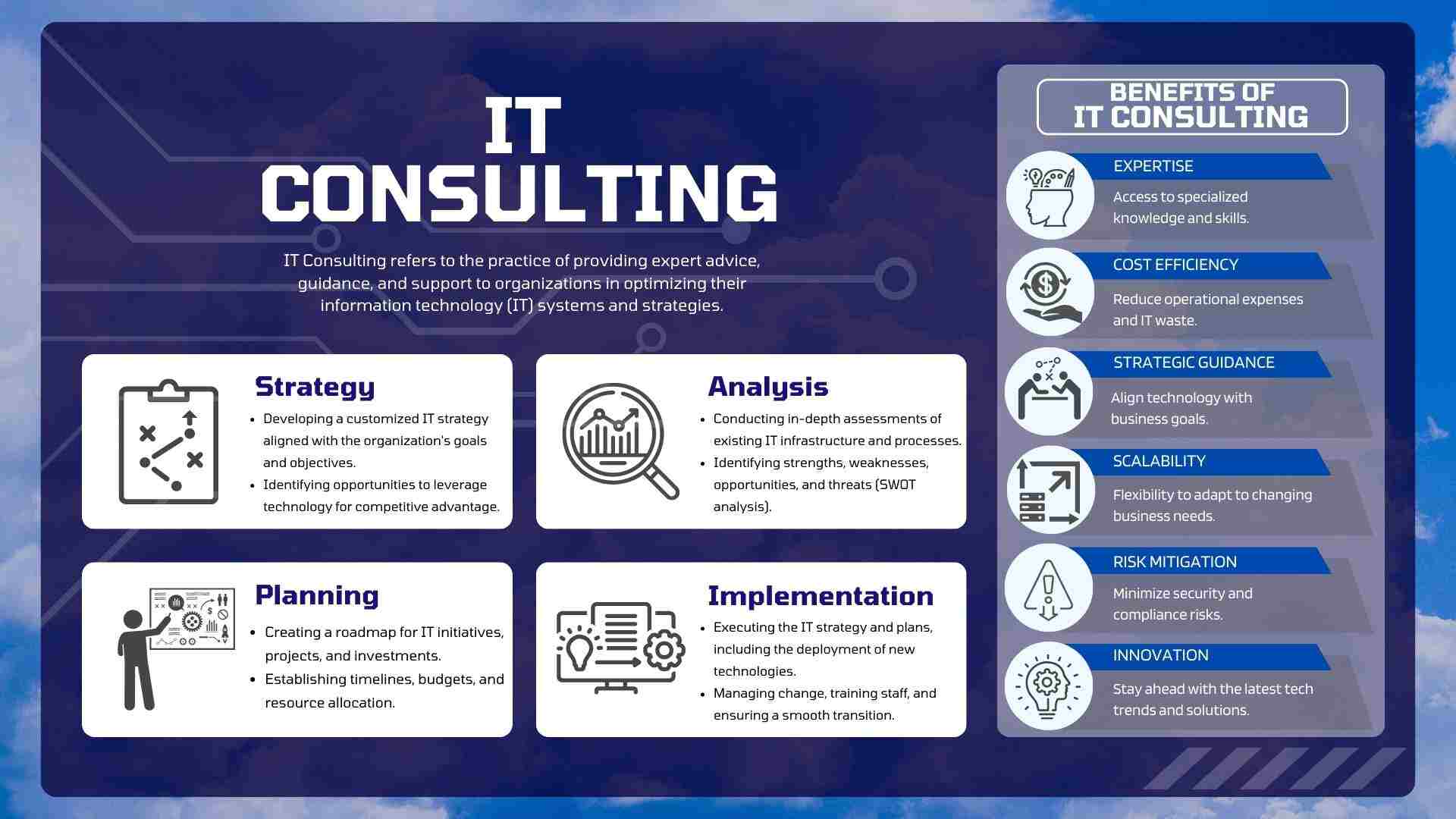
IT consulting helps organizations across multiple industries utilize technology strategically to improve efficiency, security, and growth. By aligning IT systems with business goals, companies can reduce costs, streamline operations, and make data-driven decisions. These improvements not only enhance productivity and innovation but also strengthen competitiveness across sectors. The key benefits of IT consulting are outlined below.
- Cost Efficiency: IT consulting reduces operating expenses by automating processes and optimizing resource use. For example, manufacturers use predictive maintenance to lower repair costs, while retailers deploy cloud-based systems to cut infrastructure expenses.
- Increased Productivity: Streamlined workflows and digital tools help teams work faster and collaborate better. In healthcare, integrated EHR systems save time and improve care coordination.
- Innovation and Competitive Advantage: Financial institutions gain new digital services through secure fintech solutions, while telecom companies enhance customer experience with data analytics.
- Risk Management & Security: Consultants strengthen cybersecurity frameworks to prevent breaches and ensure compliance, critical in sectors like finance and government.
- Scalability and Flexibility: Cloud adoption allows businesses to expand operations seamlessly as demand grows, especially in e-commerce and logistics.
- Digital Transformation Enablement: IT consulting guides companies through modernization, integrating AI, automation, and data analytics to stay ahead of market change.
IT consulting empowers businesses to scale effectively, enhance performance, and achieve sustainable growth through smart technology adoption. These capabilities lay the foundation for transforming overall business performance.
How IT Consulting Can Transform Your Business
IT consulting drives business transformation by aligning technology with strategic goals. It fosters innovation, boosts efficiency, and helps organizations adapt quickly to change through smarter, data-driven operations.
Companies of all sizes can leverage IT consulting to scale efficiently, improve productivity, and enhance customer satisfaction. Small businesses gain from adopting automation and cloud solutions, while larger enterprises optimize infrastructure and data management. Industries like healthcare, finance, and manufacturing continue to see major improvements in performance and security through consulting expertise.
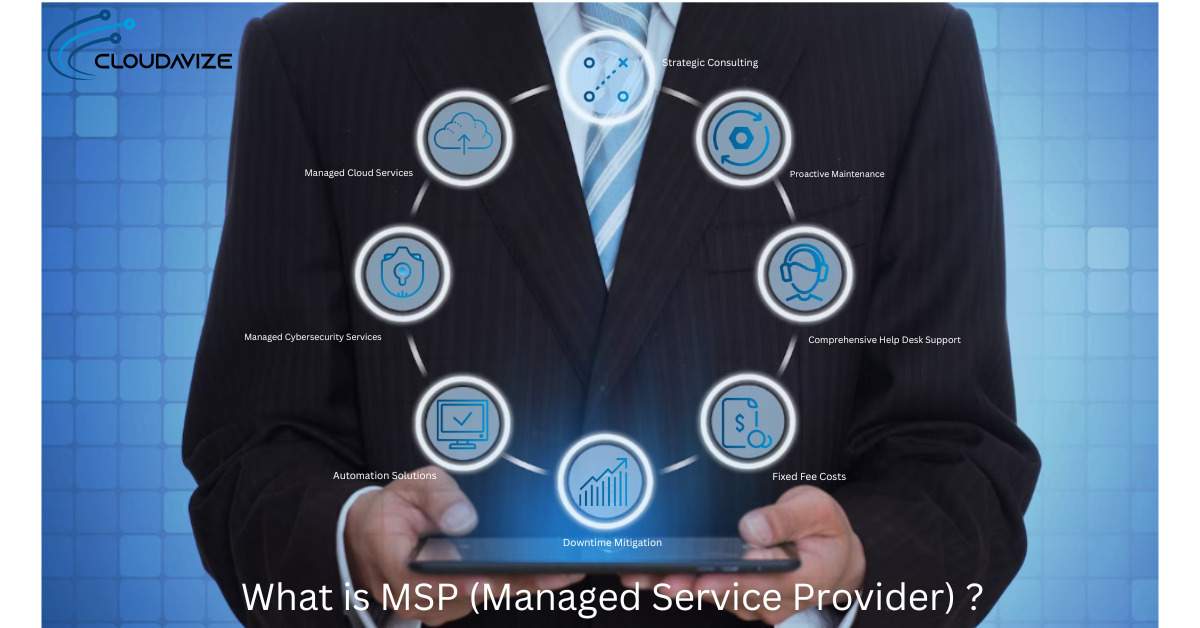
In today’s fast-changing digital market, IT consulting is essential for staying competitive and future-ready. Partnering with a trusted Managed Service Provider (MSP) ensures seamless IT integration, proactive monitoring, and long-term support. Investing in IT consulting is a strategic step toward sustainable growth, innovation, and lasting success.